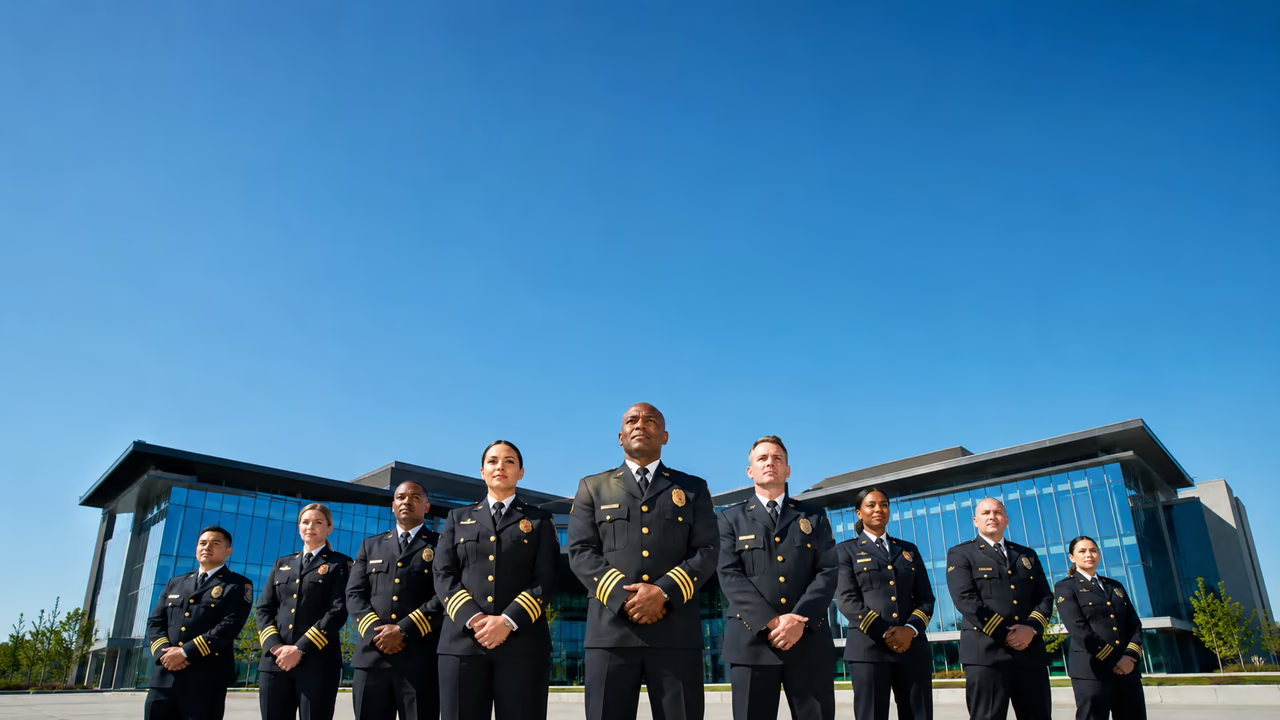
Train Today, Lead Tomorrow.
Public Safety Leadership Training Courses
Two published programs, one methodology, built around accountability, ethical decision-making, and tactical communication, and rebuilt each time around your agency's own policies and highest-risk scenarios.
Two published programs, stated plainly.
Thatcher Lewis publishes two leadership training courses, and only two. Training Tomorrow's Leaders Today, the Essentials program, is built for current and aspiring first-line supervisors. Executive Leadership Growth is built for command staff and agency executives. Both are taught by founder Chief Jon Fehlman, a career law enforcement leader serving since 1984. Chief Fehlman is also DISC certified.
Both run 2 to 5 days, work best with a cohort of 15 or more students, and are priced $695 to $895 per student depending on cohort size and delivery format. Cohorts are delivered on-site at your agency, live online, or hybrid, anywhere in the United States, for police and sheriff agencies, fire departments, EMS services, and city and county departments.
What changes between agencies is the content, not the method: the scenarios, the policy language, the ranks cast into the role plays, and the cases the room debriefs. Budget, class size, and delivery questions are answered in full in the training FAQ.
Catalog at a glance
- Published courses
- 2 (Essentials, Executive)
- Who attends
- First-line supervisors through agency executives
- Sectors
- Law enforcement, fire, EMS, public administration
- Formats
- On-site, live online, or hybrid
- Length
- 2–5 days
- Cohort
- 15+ students ideal
- Price
- $695 – $895 per student
- Customized
- Scenarios, policy language, role plays, case debriefs
- Delivery area
- Nationwide, at your agency
- Instructor
- Chief Jon Fehlman · DISC certified · serving since 1984
One methodology, a course for every tier
Every course is customized to your agency's general orders, SOPs, and highest-risk scenarios. Choose the tier that matches where your leaders are today.
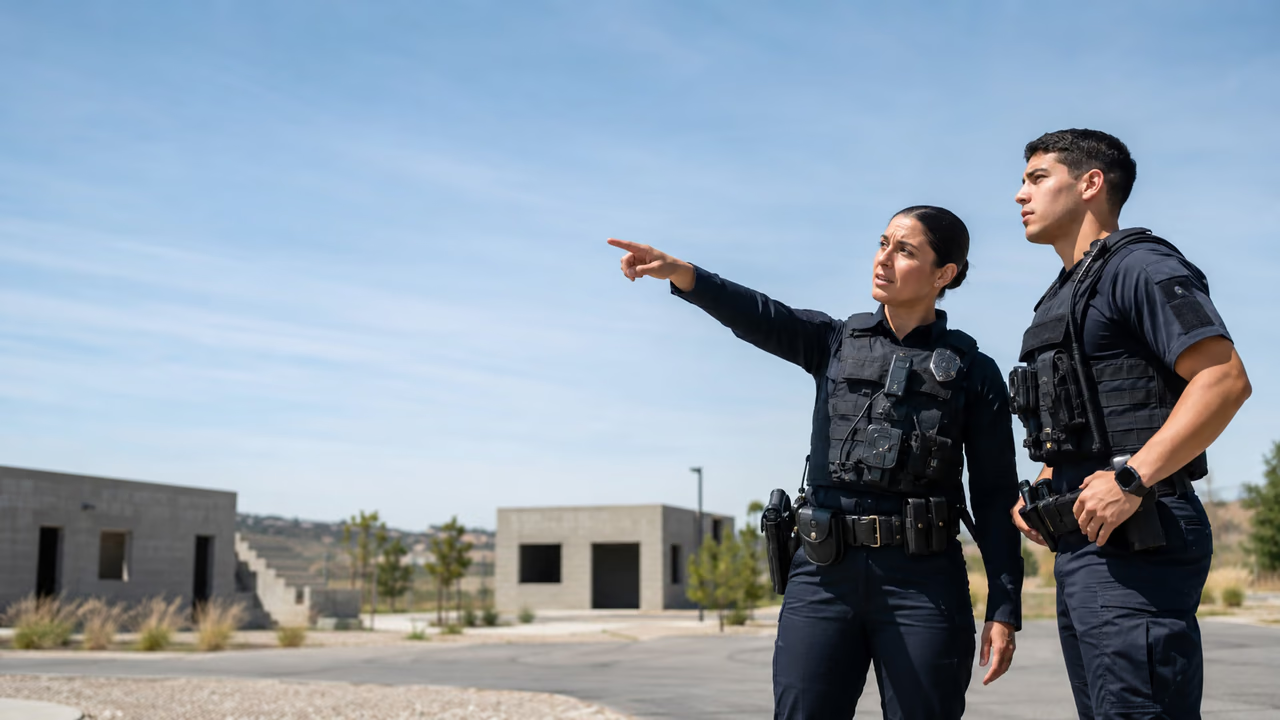
Essentials · Frontline Tier
Training Tomorrow's Leaders Today
First-line supervision, scenario by scenario, for sergeants, FTOs, company officers, EMS crew leads, and civilian supervisors: accountability, credibility, and tactical communication.

Executive · Command Tier
Executive Leadership Growth
Command-level strategy for lieutenants through chiefs: crisis leadership, policy alignment, early intervention, and ethical decision-making.

In Development
More Courses Coming Soon
New Thatcher Lewis programs are in development, built with the same policy-aligned, scenario-driven methodology as our flagship courses.
Get notified when new courses are publishedFirst line or command? Sort it in a minute.
Both courses share one methodology and one instructor. The difference is rank and responsibility: who the participant is accountable for, and how far ahead they have to see. Agencies often run Essentials first to build the bench, then Executive to align the people above them.
Tier 1 · First line
Training Tomorrow's Leaders Today
Essentials · Frontline Tier
- Accountable for
- A shift, a crew, or a unit, in person and in real time.
- Who sits in the room
- Sergeants, field training officers, future sergeants, company officers, EMS crew leads and field supervisors, civilian supervisors.
- The hard part
- Going from peer to boss without losing the room, and holding a standard you used to be judged by.
- What they practice
- Briefings and debriefings, critical conversations, coaching and honest performance feedback, counseling frameworks, leader scorecards, de-escalation, and scenario labs from your highest-risk calls.
- Choose it when
- You are promoting from within, building a bench, or your newest supervisors are leading people who were friends last month.
Full detail, module by module, on first-line supervisor leadership training.
Tier 2 · Command
Executive Leadership Growth
Executive · Command Tier
- Accountable for
- A division or a whole agency, and the culture that outlives them.
- Who sits in the room
- Lieutenants, captains, watch commanders, battalion chiefs, EMS operations managers and directors, department heads, deputy chiefs, chiefs, agency executives.
- The hard part
- Deciding under pressure with incomplete information, then owning the decision publicly.
- What they practice
- Bias and blind-spot work, risk assessment and policy-aligned decisions, negotiation and mediation, leading change, ethical decision-making, and early intervention using data and scorecards.
- Choose it when
- You are changing culture, tightening policy alignment after an incident, or preparing successors for command.
Full detail, module by module, on executive command leadership training.
Still deciding, or splitting one cohort across both tiers? Tell us who you are developing and we will point you to the tier that fits, or propose a sequence. Ask which course fits.
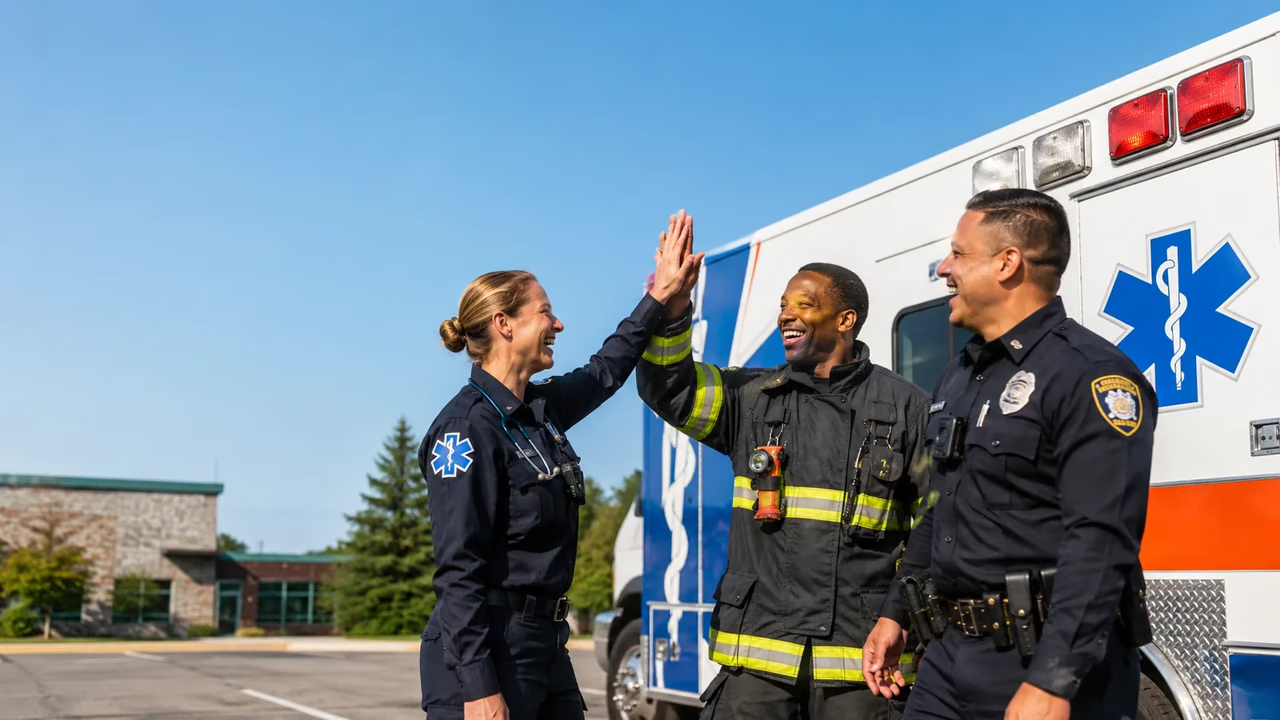
Every course, one proven methodology
Thatcher Lewis trains public-safety leaders to make defensible decisions, communicate clearly under pressure, and build station and office cultures that hold up in court, in the field, and in the community. Every course shares the same four-step approach.
Discovery
We review your goals, general orders, IA and RMS trends, CAD data, and high-risk call types to customize the curriculum.
Design
Build the program around your agency's policies, community priorities, and operational pain points. Never off-the-shelf.
Delivery
Scenario-based coaching, real-world debriefs, retention-focused practice. No lecture, no slide-deck overload.
Reinforcement
Sustained coaching after class converts new skills into durable, on-the-job habits, not a one-and-done event.
How it runs, what changes, and what you get.
The same four answers apply to both published courses. Read them before the proposal so nothing in the quote is a surprise.
Formats and logistics
- On-site at your agency or a nearby host facility
- Live online, instructor led, never self-paced or on-demand
- Hybrid: part in person, part online
- 2–5 days, ideal cohort of 15 or more students
Smaller departments split the seats and the logistics through regional multi-agency training.
What gets customized
- Scenarios drawn from your highest-risk call types
- Standards and language aligned to your general orders and SOPs
- Role plays cast to the ranks actually in the room
- Debriefs built on your own after-action themes
- Discovery review of goals, IA and RMS trends, and CAD data
The four-step method is fixed; everything inside it is rebuilt per agency. That is the policy-aligned training process.
What participants practice
- Briefing drills, leader scorecards, and counseling frameworks
- Critical conversations, de-escalation, and clear radio and scene communication
- Honest performance evaluation, and spotting who leads next
- Risk assessment and policy-aligned decisions in dynamic incidents
- Negotiation and mediation that resolve inter-departmental friction
- Early intervention using data and scorecards
Subject by subject, see the leadership topics we teach.
What is included
- A written proposal stating the full price, with no hidden platform or materials fees
- Completion certificates for personnel files and training-record audits
- Learning objectives, hours, outlines, instructor bio, and assessments
- Reinforcement coaching after the formal training window
POST credit is not yet available. Agencies submit for approval in their own state using POST and continuing-education documentation.
Every rank that answers for other people's decisions
Send the people who already carry responsibility, and the ones about to. A cohort is a single agency or a regional group of neighbors, and the roster shapes the room more than anything else in the design: the scenarios, the role plays, and the debriefs are all built around the ranks who show up.
Law enforcement
Patrol-supervisor and command leadershipIn Essentials
Corporals, sergeants, and FTOs
In Executive
Lieutenants, watch commanders, captains, deputy chiefs, and chiefs
Fire departments
Company-officer and battalion leadershipIn Essentials
Acting officers and company officers
In Executive
Battalion chiefs and fire chiefs
EMS services
Crew and operations leadershipIn Essentials
Crew leads and field supervisors
In Executive
Operations managers and directors
Public administration
Local-government leadership developmentIn Essentials
Civilian supervisors
In Executive
Department heads and city and county administrators, alongside their public safety colleagues
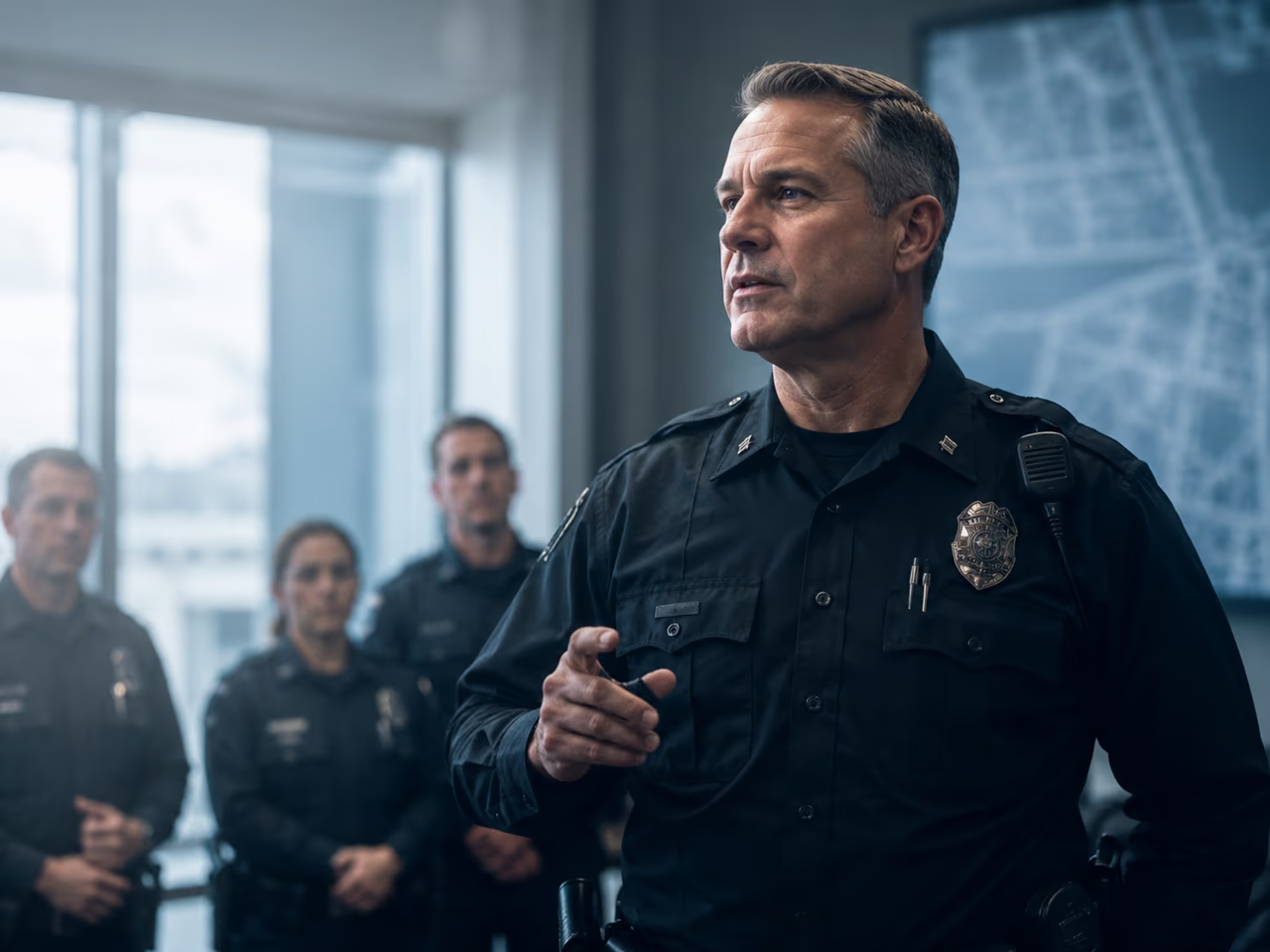
Law Enforcement
Field and crisis leadership aligned directly to your department's use-of-force and operational policies.
See the law enforcement track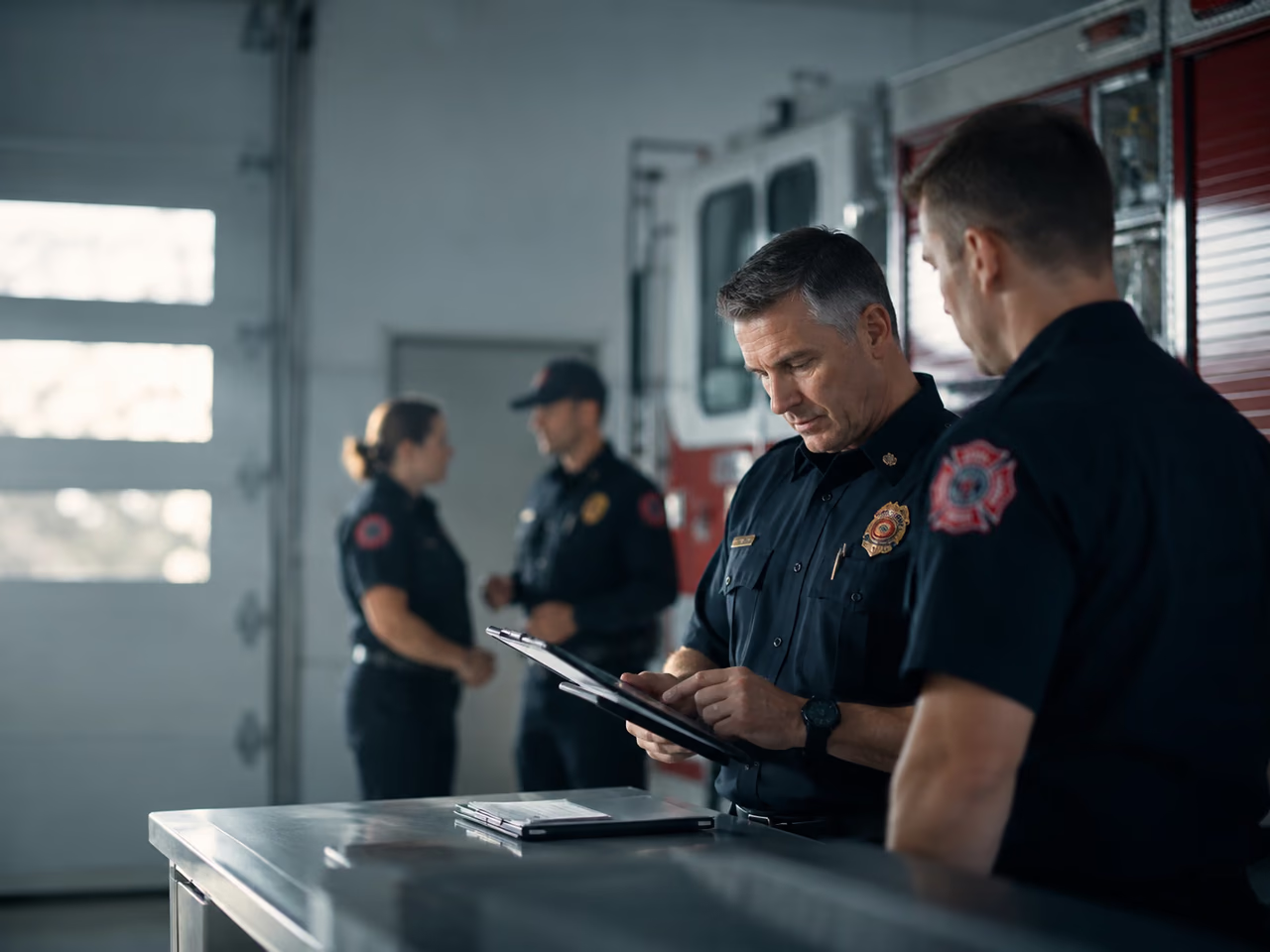
Fire Departments
Company and battalion leadership focused on SOPs, fireground safety culture, and station management.
See the fire service track
EMS Services
Crew and supervisor leadership for EMS: command presence under pressure, crew accountability, and documentation that holds up.
See the EMS track
Public Administration
Leadership development for city and county departments, ensuring cross-department coordination and clear stakeholder communication.
See the local government track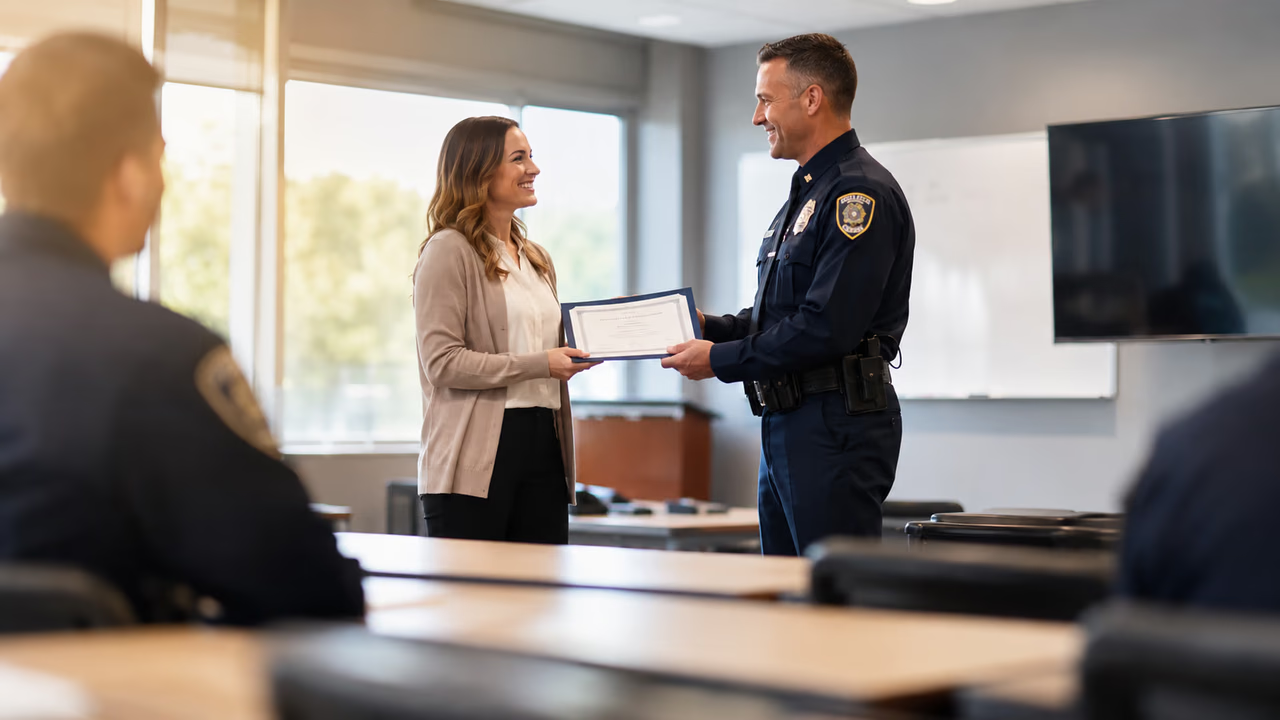
Leadership is a learned skill. We bring the curriculum to your facility.
To host a course, request a custom proposal, or view our transparent pricing options, including no-hidden-fees pay-on-site availability, reach out to our coordination team.