EMS LeadershipTraining Programs
Accountability, Culture, and Command: From Field Expert to Effective Leader
In the current national staffing crisis, leadership isn't just a rank, it's your best retention tool. EMS supervisor training is the rung most agency ladders are missing: we equip supervisors and field training officers with the command presence, crew resource management habits, and coaching structure required to lead high-performing teams through the modern operational tempo.
Direct Value: We don't teach clinical practice; we teach the tactical application of supervisory authority, drawn from decades of law enforcement command experience, that stabilizes crews and protects your agency's reputation.




Chief-led delivery, nationwide
Scenario-Based Coaching
For public safety leaders
Why Agencies Trust Thatcher Lewis Leadership Expertise
Partner with a career chief who has led public safety teams from patrol through executive command. We deliver policy-aligned training that builds confident, principled leaders who make defensible decisions, communicate clearly, and coach daily to raise standards and performance.
Contact NowDecades of Command Responsibility
We aren't just "management consultants." Training is led by a career law enforcement chief who carried command responsibility for high-liability decisions, public scrutiny, and personnel safety. Clinical practice stays with your medical direction; what we add are the supervisory tools required to stabilize crews and protect your agency's reputation.
High-Stakes Decision Models
We translate high-pressure command decision-making into a resilient organizational culture that improves field performance. Our training helps leaders maintain "big-picture" safety and situational awareness while crews are focused on critical patient care.
Scenario-Based Performance
We replace "Death by PowerPoint" with scenario-based coaching and real-world debriefs that turn clinical rank into true leadership capability. This approach focuses on developing the professional intuition required to lead through modern operational tempos.
Crew Resource Management
Our curriculum is built on the foundations of public safety and high-stakes accountability. We equip EMS supervisors with the "Command Presence" and coaching habits required to lead high-performing teams with professionalism and zero "drama."
The 2026 Reality: Leadership is No Longer Optional
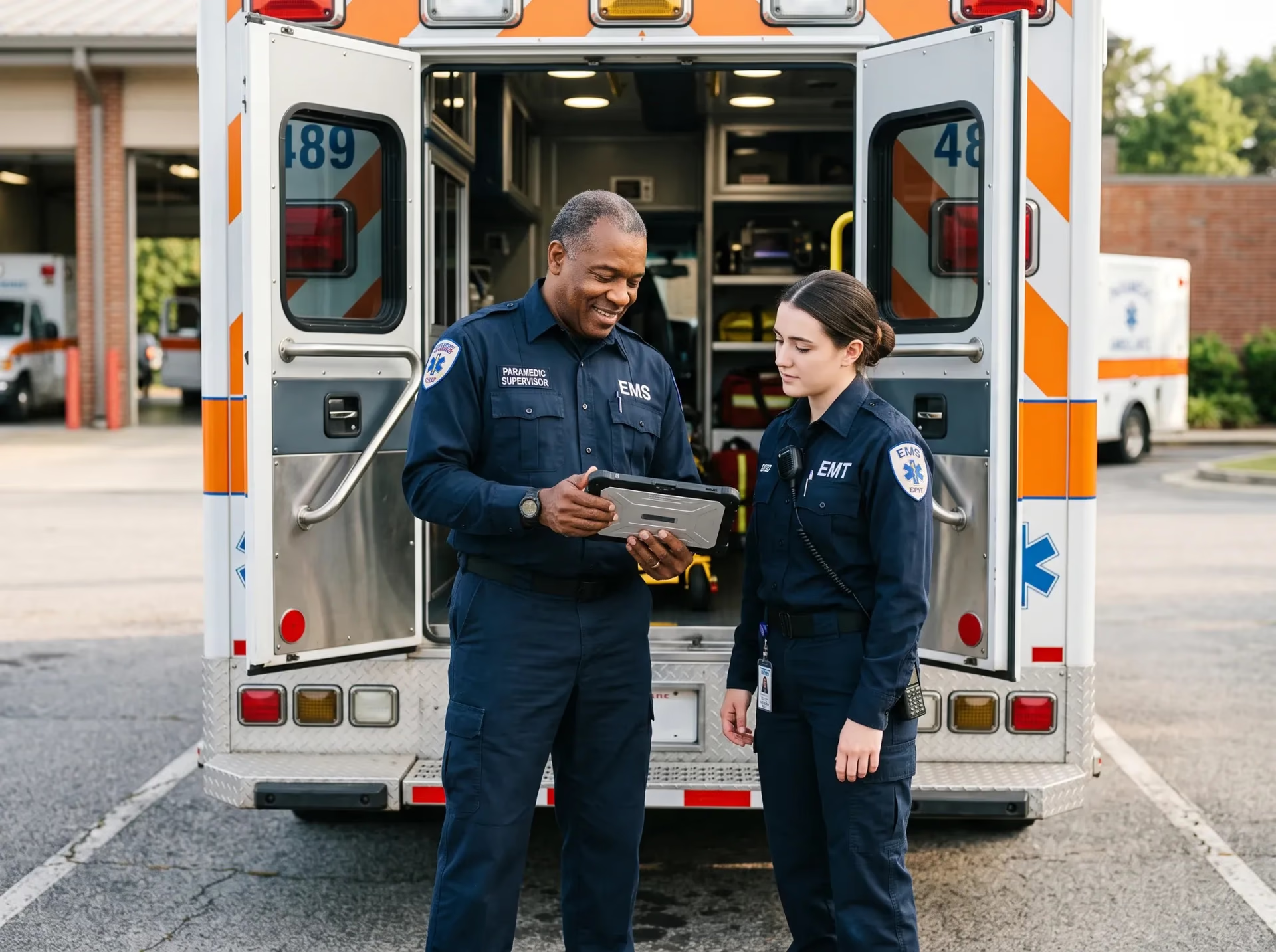
From boots on the ground, to filling the leadership shoes. The "Old School" way of promoting the best medic and hoping they learn to lead is a recipe for turnover. The provider-to-supervisor transition is a skill set, and it can be taught.
- The Retention Gap: In EMS, retention problems are rarely about the profession itself. They are about inconsistent, unsupportive leadership. We help you become the "Agency of Choice" by professionalizing the supervisor-provider relationship.
- The Accountability Crisis: In a "litigation-first" world, supervisors often avoid difficult conversations to stay "liked." We provide the frameworks to hold people accountable without creating a toxic environment.
- The "Friend-to-Boss" Trap: This is a common pain point for new supervisors. Transitioning from a partner in the back of the ambulance to a supervisor in the front office requires a psychological shift that we facilitate through scenario-based immersion.

The Fehlman Advantage: Why a Police Chief for EMS?
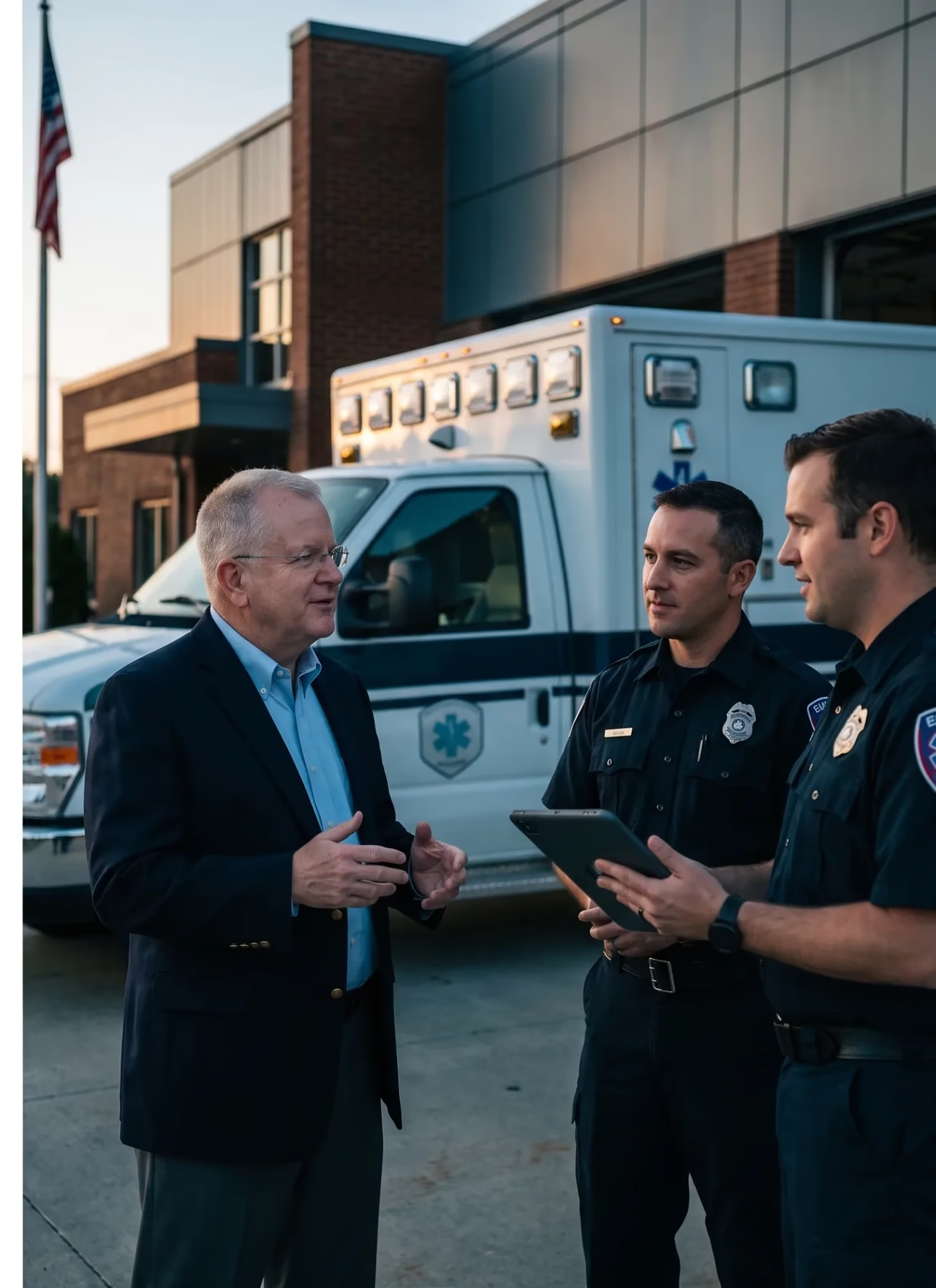
Jon Fehlman spent decades in the "Command SUV." He understands that while the tools are different, the stressors are identical: high-liability decisions, public scrutiny, inter-agency friction, and the weight of crew safety. Chief Fehlman translates "Gold Shield" command principles into the "Blue Star" world of EMS, giving your supervisors a perspective on liability, discipline, and command presence that only a career executive can provide. Chief Fehlman is also DISC certified.
Get In TouchRadical Accountability & Difficult Conversations
Leadership is easy until it's time to address a performance issue. We teach the "Standards-First" communication model, a repeatable structure for handling tardiness, clinical errors, and station friction with professionalism and zero "drama."
Leadership & Tactical Operational Awareness
Command presence is more than just a radio voice. This module builds habits for managing complex scenes, coordinating with Fire/LEO partner agencies, and maintaining "big-picture" safety while crews are focused on patient care.
Resilient Leadership: The EQ of EMS
High-stress seasons lead to burnout. We train leaders in Emotional Intelligence (EQ) and "Leader-Ready" resilience frameworks to identify provider fatigue early and maintain a steady, professional culture during high-volume shifts.
Narrative Discipline & Documentation Coaching
Supervisors are the first line of defense for agency liability. Learn how to coach crews on documentation quality, turning mediocre narratives into defensible medical-legal records through consistent, objective feedback.
Leadership That Protects Your Crews, Your Patients and Your Agency.
In EMS, leadership is no longer optional. Retention problems are rarely about the profession itself; they are about inconsistent, unsupportive leadership. Promoting the best medic and hoping they learn to lead is a recipe for turnover, and in a litigation-first world, supervisors often avoid difficult conversations to stay liked.
Thatcher Lewis provides EMS leadership training for field training officers, crew leads, and new supervisors, and for operations managers, EMS chiefs, and directors across third-service, fire-based, hospital-based, and private EMS systems. Every engagement is customized to your policy and goals, never delivered as generic management consulting.
Led by Chief Jon Fehlman, a career law enforcement leader who spent decades in the command SUV, the training translates command principles into the world of EMS. He does not teach clinical practice, and the course does not touch protocol or medical direction. What carries across is the supervisory load: high-liability decisions, public scrutiny, inter-agency friction, and the weight of crew safety. Your supervisors gain a perspective on liability, discipline, and command presence that only a career executive can provide.
Participants work through scenario-based coaching and real-world debriefs rather than death by PowerPoint: the friend-to-boss transition, the Standards-First communication model for handling tardiness, clinical errors, and station friction, documentation coaching that turns mediocre narratives into defensible medical-legal records, and resilience frameworks that identify provider fatigue early.
The goal is practical: supervisors who set standards and have hard conversations while keeping crew trust, hold people accountable without creating a toxic environment, and correct problems early, before they become safety or liability issues. That is how an agency professionalizes the supervisor-provider relationship and becomes the agency of choice.
Read as a whole, EMS leadership training here is field training officer leadership, the provider-to-supervisor transition, crew resource management, documentation discipline, and honest debriefing, taught together because retention depends on all five. It is one of four sector tracks, and the sector-specific leadership training overview sets it beside the law enforcement, fire, and local-government versions. Continuing-education credit is not yet available, so agencies that need records for a personnel file receive the training documentation package and can submit it for EMS or local approval.
Training built around your agency
- Policy-aligned: Customized to your policy and goals, not delivered as generic management consulting.
- Scenario-driven: Scenario-based coaching and real-world debriefs, not death by PowerPoint.
- Chief-led: Taught by a career executive who carried high-liability decisions and crew safety for decades.
- All ranks: Built for FTOs, crew leads, supervisors, operations managers, and EMS chiefs and directors.
We're here to help


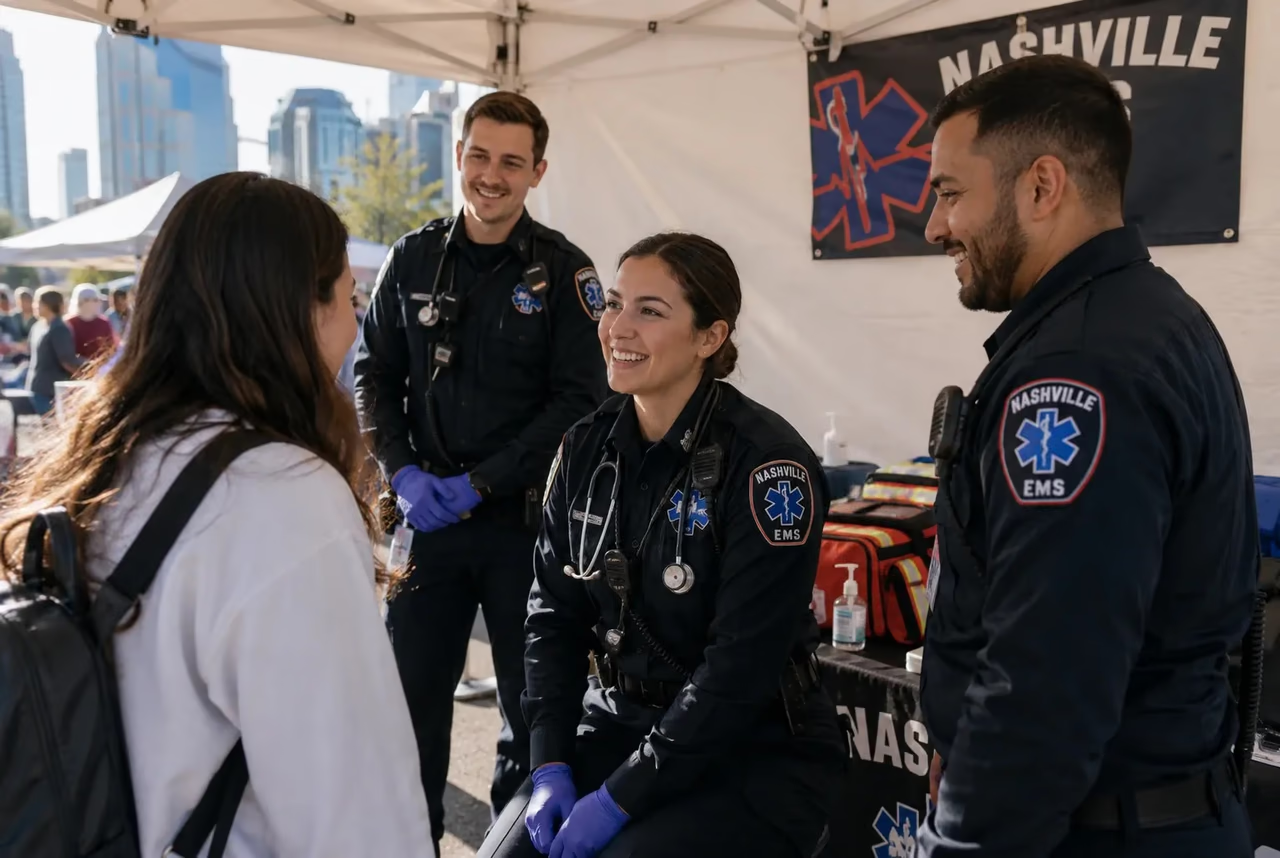
Field training officers, crew leads, EMS supervisors, operations managers, and EMS chiefs and directors across third-service, fire-based, hospital-based, and private EMS systems. If your decisions and standards affect a crew, this applies to you.
Practical leadership behaviors that hold up under EMS pressure: high-stakes decision-making, clear patient and crew communication, documentation discipline, effective debriefs, accountability without humiliation, and the shift from peer to supervisor.
Directly. Moving from a partner in the back of the ambulance to a supervisor requires a real psychological shift. We work it through scenario-based practice so new supervisors can set standards and have hard conversations while keeping crew trust.
On-site, live online, or hybrid. Two to five days depending on modules. Ideal cohort size 15 and up. Venues determine the maximum number of seats. Regional, multi-agency sessions are available.
POST credit is not yet available. We provide learning objectives, hours, instructor bios, outlines, and assessments so your agency can submit for POST, EMS, or local approval, and we can provide completion certificates for personnel files if requested.
More consistent accountability, stronger mentoring, clearer communication on calls, better documentation, healthier crew culture, and supervisors who correct problems early, before they become safety or liability issues.
Thatcher Lewis aligns curriculum to current standards published by government and industry bodies. Below are primary sources we reference for accountability frameworks, training standards, and policy guidance.
NHTSA Office of EMS
Federal office that coordinates national EMS policy and publishes the National EMS Scope of Practice Model.
National Registry of Emergency Medical Technicians (NREMT)
National certification body that administers EMS certification examinations and maintains a registry of certified EMS clinicians.
National Association of Emergency Medical Technicians (NAEMT)
Professional association for EMS practitioners that publishes continuing-education programs and practice guidance.
Ready to Develop Your Leaders?
Partner with Thatcher Lewis to build confident, principled leaders who drive results and strengthen your organization from the inside out.
Get Started