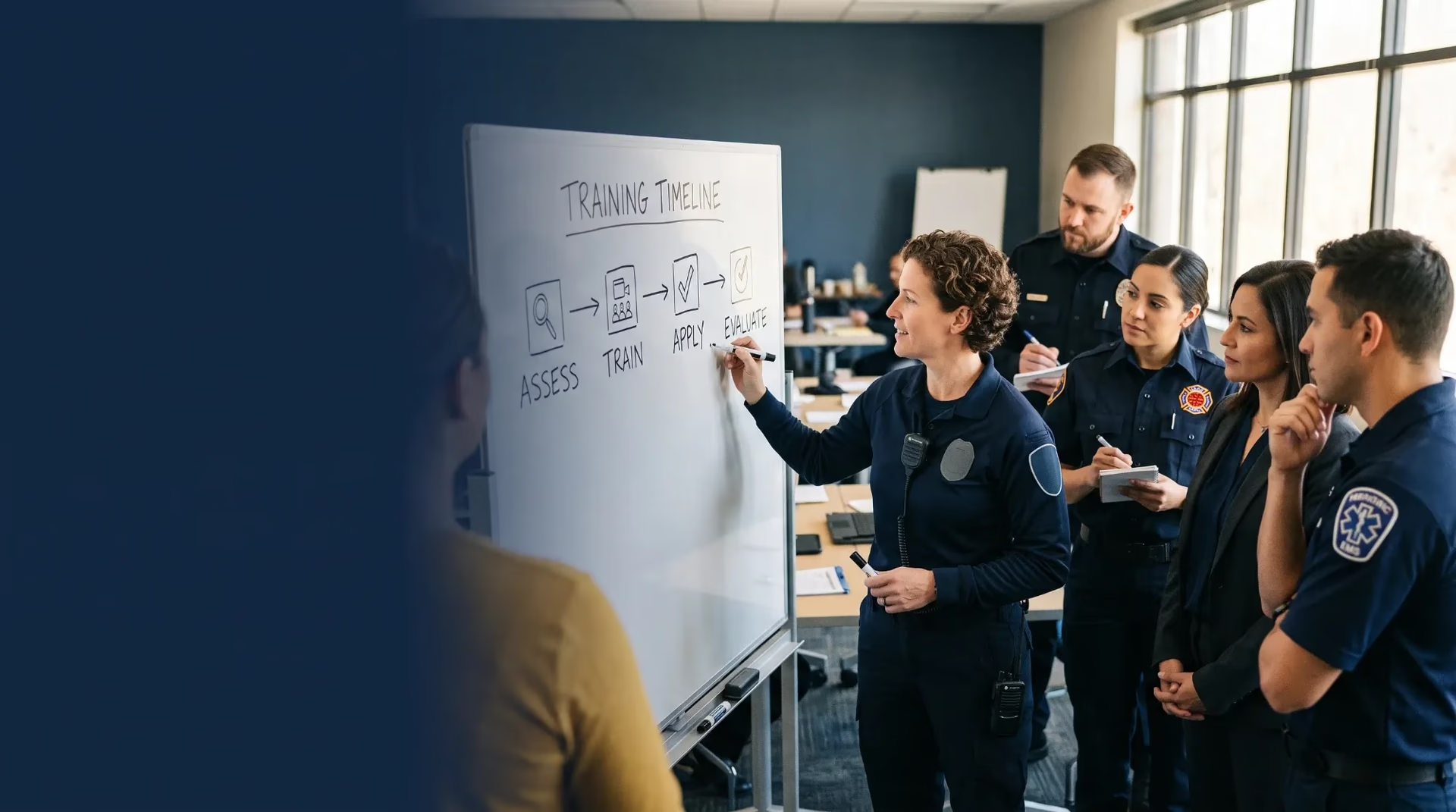
How our leadership training works, start to finish.
Thatcher Lewis delivers instructor-led, cohort-based leadership training on-site at your agency, live online, or hybrid, nationwide. Here is exactly what happens between the day you contact us and the day your supervisors are leading differently: what it costs, how long it takes, how far the curriculum is customized, and what actually differs between the three delivery formats.
- Length
- 2–5 days
- Cohort
- 15+ students
- Formats
- On-site · Online · Hybrid
- Documentation
- Objectives, hours, outlines, certificates
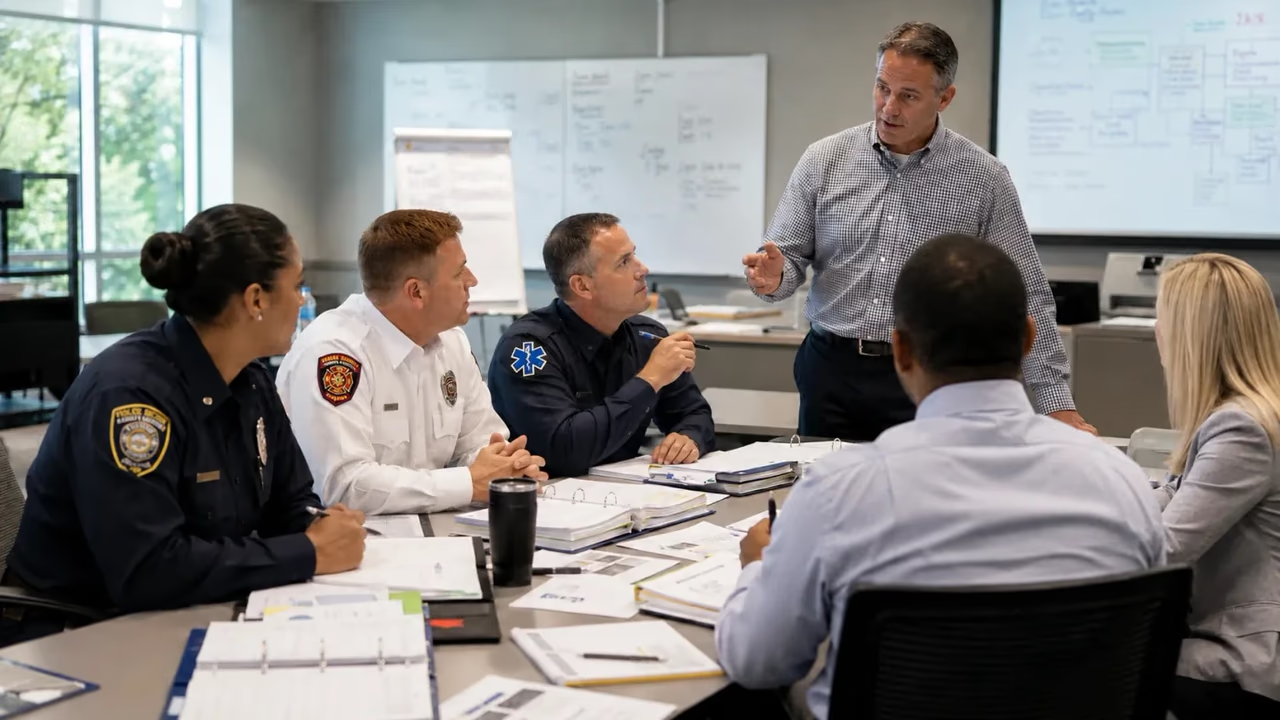
Thatcher Lewis runs cohort-based leadership training across all four public services: law enforcement, fire departments, EMS, and public administration. There are two published courses. The Essentials course is written for first-line supervisors, and the Executive course is written for command staff. Both are instructor-led and scenario-based, both run 2 to 5 days, and both are priced $695 – $895 per student. The engagement described below is the same whichever course you choose and whichever of the three delivery formats you run it in.
None of it is off-the-shelf. Customization is not a slide with your logo on it: the curriculum is aligned to your own general orders, SOPs, and discipline policy, and the scenarios are rewritten around the calls, complaints, and personnel decisions your supervisors are already handling. That is why the leadership topics the courses cover stay constant while the examples used to teach them change from one agency to the next.
- Step 01
Discovery call
A real conversation about your agency: goals, current friction points, supervision gaps, and what outcomes would make the training worth it. You leave the call with a clear picture of fit, and a written proposal follows with the full price stated up front ($695 – $895 per student).
- Step 02
Policy-aligned build
We align the curriculum to your general orders, SOPs, and policies. Scenarios are rewritten around the decisions your supervisors actually face, so nothing in the room feels like generic corporate training with a badge sticker on it.
- Step 03
Scenario-based delivery
Two to five days, taught personally by Chief Jon Fehlman, on-site at your agency, live online, or hybrid. Cohorts of 15+ work through accountability, tactical communication, and critical conversations by doing them, not by watching slides about them.
- Step 04
Reinforcement
Most leadership programs end when the workshop does, and old habits reassert themselves within weeks. Sustained coaching after class is what converts new skills into lasting, on-the-job habits: the difference between an event and a change.
The same leadership training is delivered three ways, and the choice is a logistics decision, not a quality one. What changes is travel, how the days are blocked, and where the cohort sits. What does not change is the course itself.
On-site at your agency
The instructor travels to you and the class runs in your own building: training room, station classroom, academy, or EOC. Your supervisors sit in the seats, and if you open the cohort to neighboring departments, their supervisors fill the rest.
Choose this when
You can release a block of days, you have a room that seats 15 or more, and you want the scenarios argued in the building where those decisions actually get made.
Live online
The same course taught live over video by the same instructor. Live online means a scheduled session with real discussion and real scenario work, not a recorded library and not a self-paced module you assign and forget.
Choose this when
Shift coverage will not survive pulling everyone into one room, or your supervisors are spread across precincts, stations, or counties.
Hybrid
Part in person, part live online, sequenced around your staffing. The in-person days can carry the heaviest scenario work while the remaining material runs online, so the course does not have to land as one uninterrupted block.
Choose this when
You want time in the room but cannot free the calendar for consecutive days, or you are training supervisors across several sites at once.
What is identical in all three formats
Format changes the logistics. It does not change the course, the instructor, the standard, or the paperwork your training unit ends up filing.
- The curriculum, aligned to your general orders, SOPs, and policies
- The instructor: Chief Jon Fehlman teaches the flagship engagements personally
- The cohort model: 15+ students working through scenarios, not watching slides
- The scope: 2 to 5 days, depending on the tier and how much customization you ask for
- The documentation: learning objectives, instructional hours, outlines, assessments, and completion certificates
- The published price band: $695 – $895 per student
- The credit position: POST credit is not yet available in any state, on-site or online
Can you release 15 or more supervisors for consecutive days?
If yes, on-site is the simplest build: one block, one room, everyone in it. If no, hybrid or live online lets the same course be split around the shift matrix instead of fighting it.
Do you have a room that holds the cohort?
A station classroom, an academy, or a city facility is enough. If you do not have one, a neighboring agency hosting the session solves it, and their supervisors join the same cohort.
Are the people you want in the class in one place?
Supervisors spread across precincts, stations, or a whole county are the clearest case for live online. It is the same curriculum, the same instructor, and the same scenario work either way.
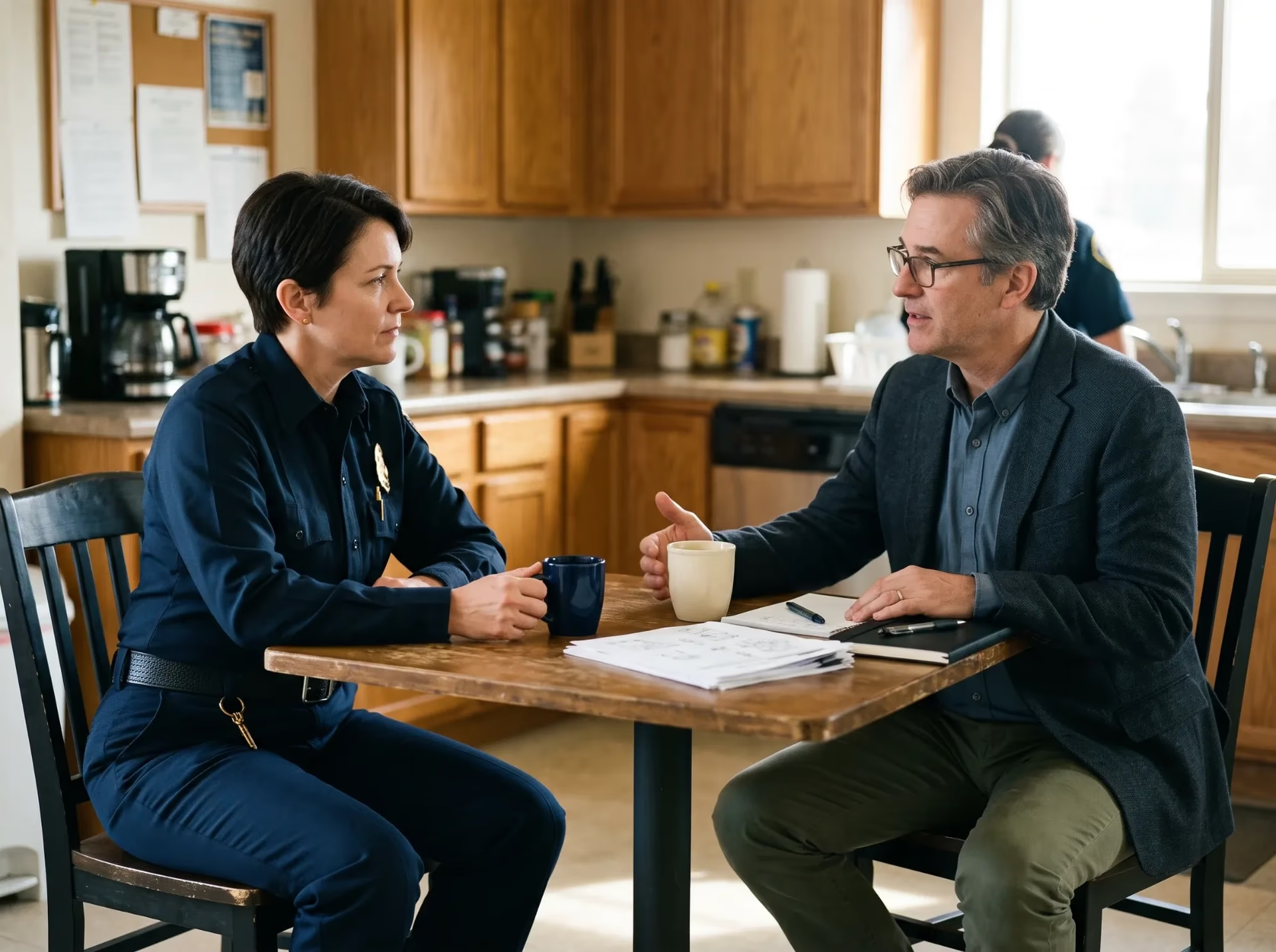
Ready for step one? It's a conversation, not a contract.
Compare the two published courses, review answers about pricing, delivery, and POST status, or start the discovery call and we'll help you decide which tier fits.