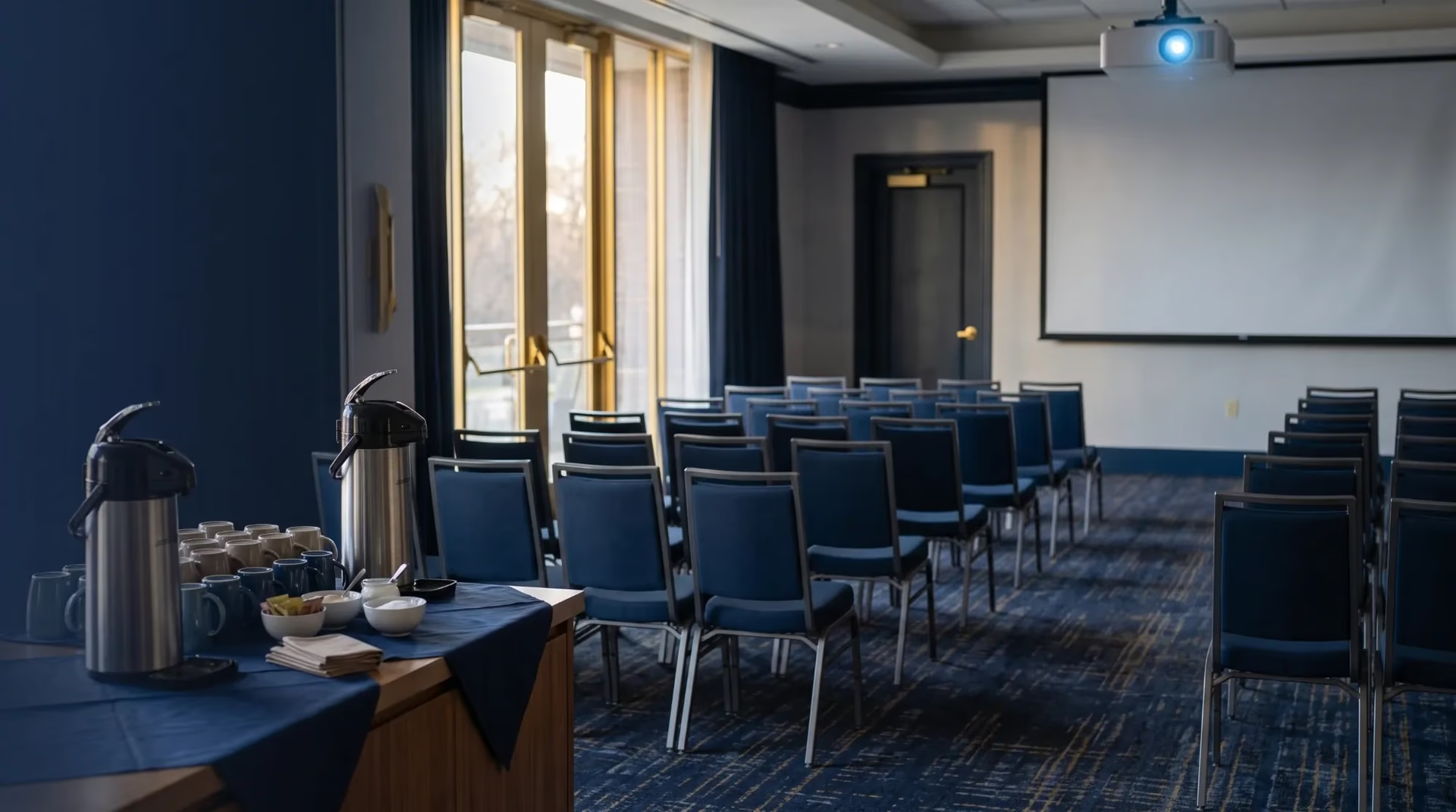
Your venue, your dates, your region's leaders.
Hosting means the leadership training comes to you: your agency provides the room and the dates, Thatcher Lewis brings the curriculum and the instructor, and neighboring departments can fill the remaining seats in the cohort.
Hosting is the on-site path for this leadership training: one agency supplies the room and the dates, and the class runs where the work actually happens. The alternatives are live online or hybrid delivery, which need no venue at all.
Train on your ground
Your people learn in the environment they actually lead in, with scenarios aligned to your general orders instead of a hotel-ballroom hypothetical.
Fill seats regionally
Cohorts work best at 15+. Hosting lets smaller neighboring agencies buy individual seats in your session, splitting the logistics everyone would otherwise carry alone.
Build regional relationships
Supervisors who train together coordinate better later: mutual aid, task forces, and county-wide incidents all run smoother when the leaders already know each other.
Control the calendar
As host you pick the dates that fit your shift matrix, and we build the delivery format (consecutive days or split blocks) around your staffing reality.
Working out who belongs in the room? Each sector page lists the ranks that attend and what they train on: law enforcement supervision, fire service command, EMS supervision, and public administration. A hosted cohort can mix them, because all four services train on the same accountability methodology.
Schedule A
The host provides
- A training room that seats the cohort (station, academy, EOC, or city facility)
- Dates that work for your shift schedule
- An internal point of contact for logistics
Schedule B
Thatcher Lewis provides
- The full curriculum, aligned to your policies
- Chief Jon Fehlman teaching in person (DISC certified) (or live online / hybrid)
- Invitations support for neighboring agencies, if you want a regional cohort
- Learning objectives, hours, outlines, and completion certificates for training records
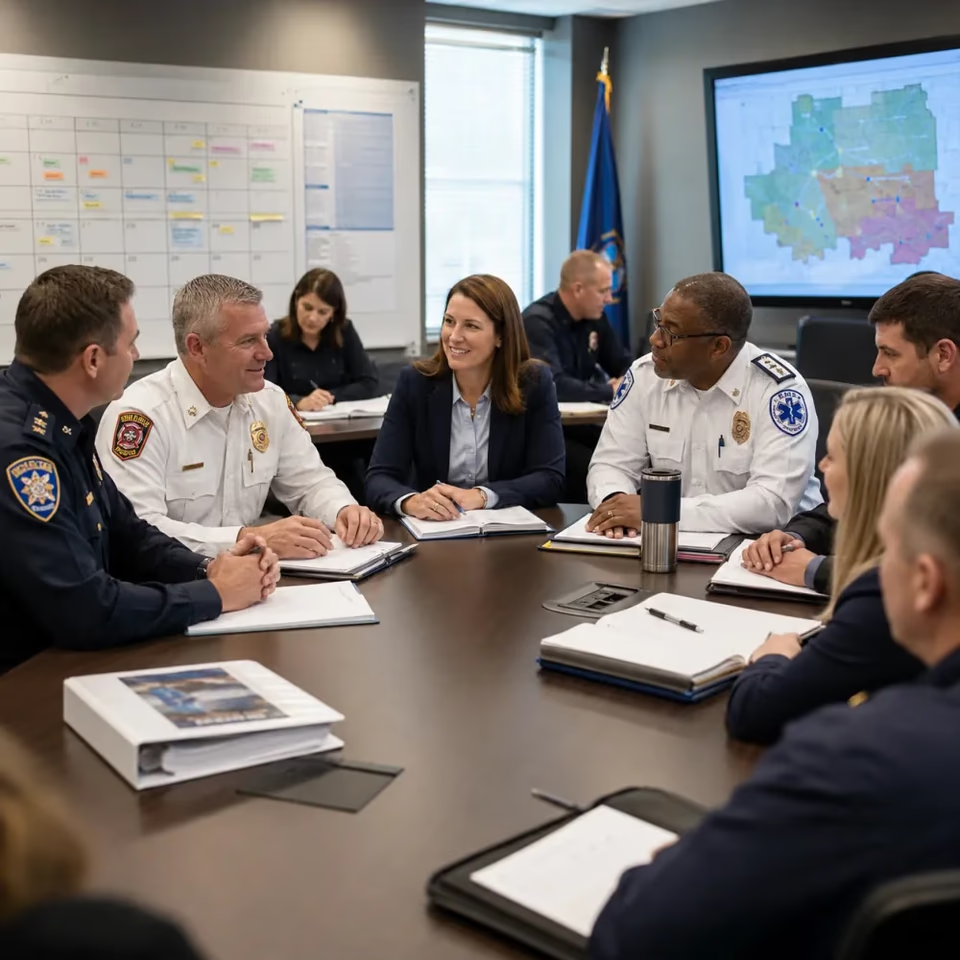
Hosting does not put your agency on the hook for anything until a proposal is signed. It follows the same four-step training method every engagement follows, with one extra decision at the front: whether the seats stay in-house or open to the region.
Propose a room and a window
Tell us the facility, the rough headcount, and the months that work against your shift matrix. Nothing is committed at this point.
Discovery call
A conversation about which course fits, who belongs in the seats, and whether the session stays in-house or opens regionally. Delivery format is settled here too: in person on your ground, live online, or hybrid.
Written proposal
Dates, scope, and the full price stated up front at $695 – $895 per student. No platform fees, no materials fees, nothing revealed later.
Policy-aligned build
The curriculum is aligned to your general orders and SOPs, and the scenarios are rewritten around the decisions your supervisors face in your jurisdiction.
Class runs, records file
Two to five days on your calendar, then learning objectives, instructional hours, and completion certificates go into personnel files for training-record audits.
Budgeting questions before you propose anything? Pricing, duration, and class-size answers are collected in the FAQ.

Have a room and a date in mind? That's all hosting takes.
Tell us the course you want to host (Essentials or Executive), your rough headcount, and your preferred window. We'll handle the rest.