Fire DepartmentLeadership and Accountability Training
Leadership Skills For
Fire Departments
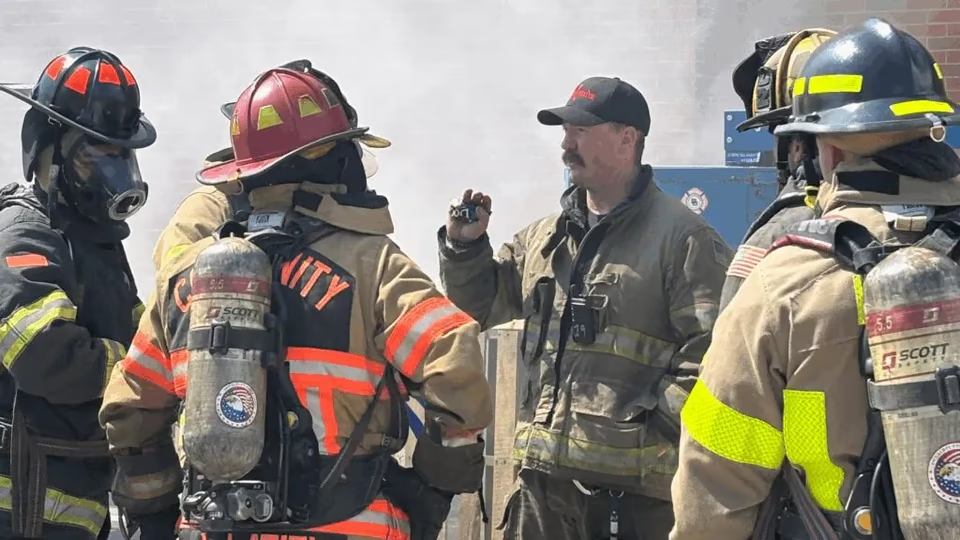
Fire department leadership training has to hold up in two places at once: the station and the fireground. As a leader in a fire department, your actions speak louder than the badge on your chest. Regardless of rank, position, or even occupation, leadership can make or break a department. You must model integrity, make confident decisions, and stay steady in the station and on the fireground, on duty and off. Your team's success depends on your ability to serve them with integrity, not control. This servant-leadership approach is a core tenet of the National Fire Academy (NFA) leadership curriculum.
- Leadership Essentials
- Learning to Lead by Example
- Leading with Accountability
Leadership Skills in The Station
From the Station to the Field
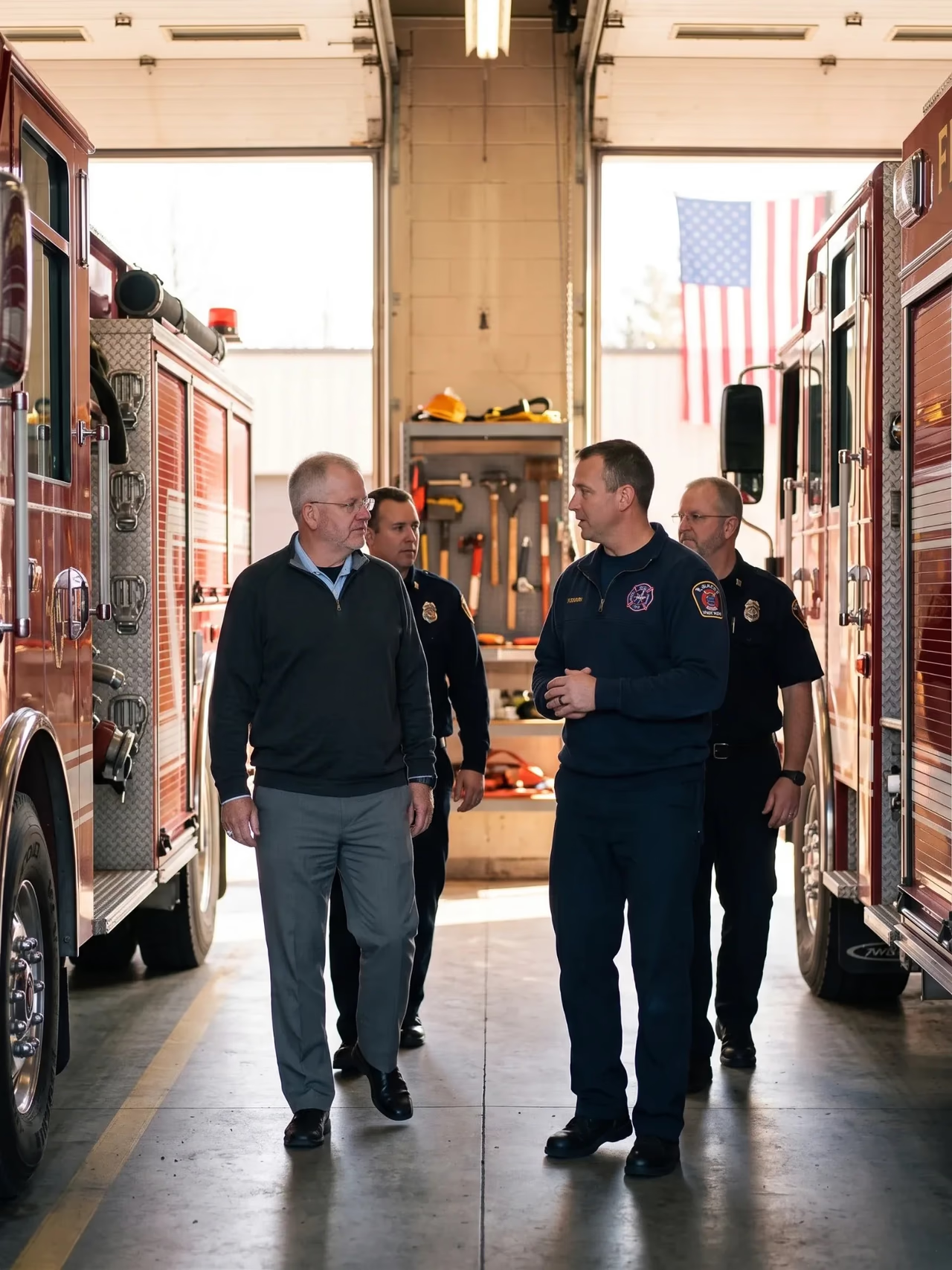
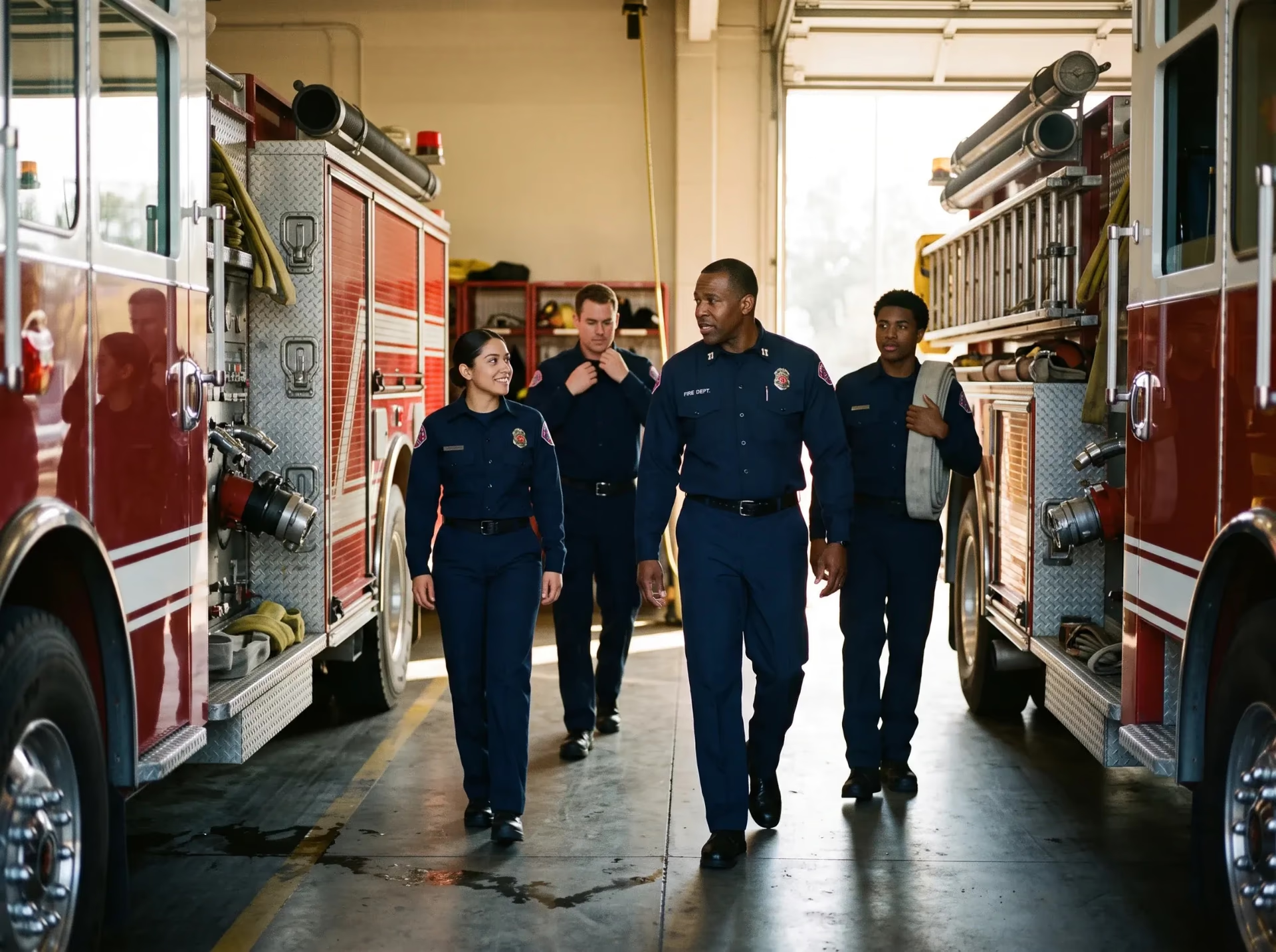
What happens in the station rarely stays in the station. Fire service research consistently shows that poor station culture directly impacts operational performance. The International Association of Fire Chiefs (IAFC) emphasizes that leadership credibility is built through everyday behavior. Crews judge leaders by what they tolerate, not what they say. This is often referred to as "The Standard," where a leader's silence in the face of a policy violation is viewed as an endorsement. Bad habits in the station promote behavior that spreads like wildfire and compromises tactical safety.
Company officer leadership starts here. Strong station leadership principles you'll learn include:
- Correcting unsafe or unprofessional behavior immediately to prevent the "normalization of deviance"
- Maintaining accountability without humiliation
- Mentoring newer firefighters through example and guidance
- Managing conflict directly and professionally to maintain crew cohesion
The Foundation of Fire Service Leadership
Integrity
Integrity is the cornerstone of leadership. Your crew must trust that your words match your actions.
Character
Your character is your reputation in action. Leaders demonstrate honesty, humility, respect for others, and consistency in behavior.
Service Before Self
Leadership in this profession is not about authority. It's about responsibility. Put the needs of the community first, support your crew, and make sacrifices for the greater good.
Accountability
A leader accepts responsibility for their actions and the actions of their team: clear expectations, honest evaluation, and willingness to correct course when needed.
Communication
Effective communication saves lives. Speak clearly and confidently, listen actively, deliver feedback constructively, and communicate expectations before, during, and after incidents.
Competence
Your crew must trust your skills. Competence is built through mastery of firefighting fundamentals, continuous training, and staying current with evolving tactics and technology.
Calm Under Pressure
Emergencies demand leaders who can think clearly when others cannot. Maintain composure, make timely decisions, and prioritize tasks under stress.
Adaptability
Every incident is different. Leaders must adjust strategies quickly, embrace new ideas, and remain flexible in dynamic environments.
What you'll learn
Incident Command Leadership
Strengthen command presence and decision-making during dynamic fireground operations with structured leadership frameworks.
Post-Incident Review
Facilitate effective after-action reviews that capture lessons learned, improve tactics, and reinforce a culture of continuous improvement.
Safety Culture
Build a department-wide safety mindset through leadership practices that prioritize crew welfare without sacrificing mission effectiveness.
Communication Skills
Develop clear, concise communication techniques for fireground operations, interagency coordination, and crew briefings.
Battalion Leadership
Prepare battalion chiefs and senior officers for the strategic and supervisory demands of multi-company and multi-alarm incidents.
SOP Alignment
Ensure leadership decisions and training scenarios reflect your department's current standard operating procedures and protocols.
Leadership That Holds The Standard, In the Station and On the Fireground.
As a leader in a fire department, your actions speak louder than the badge on your chest. Regardless of rank, position, or even occupation, leadership can make or break a department, and crews judge leaders by what they tolerate, not what they say. What happens in the station rarely stays in the station: what is tolerated there becomes normal on calls.
Thatcher Lewis provides fire department leadership training for firefighters, acting officers, and company officers, and for battalion chiefs, senior officers, and command staff. Every engagement is aligned to your department's current standard operating procedures and protocols, so leadership decisions and training scenarios reflect the way your department actually operates.
Led by Chief Jon Fehlman, the training works through practical, scenario-driven sessions built around the behaviors that shape station culture: correcting unsafe or unprofessional behavior immediately to prevent the normalization of deviance, maintaining accountability without humiliation, mentoring newer firefighters through example and guidance, and managing conflict directly and professionally to maintain crew cohesion. Chief Fehlman is also DISC certified.
The foundation is the same on every shift: integrity, character, service before self, accountability, communication, competence, calm under pressure, and adaptability. These are practical leadership behaviors that improve station culture and fireground performance, all without relying on intimidation or ego.
Whether your department is developing company officers or preparing battalion chiefs for multi-company and multi-alarm incidents, Thatcher Lewis builds leaders whose standards are enforced early, whose communication is clear on scene, and whose crews trust that their words match their actions.
Because the whole program is organized around station-to-fireground culture, fire department leadership training here treats incident command presence and structured post-incident review as extensions of the same habits, not separate subjects. It is one of four sector tracks; the leadership training across all four public services overview shows how the fire version compares with the law enforcement, EMS, and local-government tracks. POST credit is not yet available, so departments that need records for a training file receive the training documentation package and can submit it for local approval.
Training built around your department
- Policy-aligned: Customized to your department's current standard operating procedures and protocols.
- Scenario-driven: Built around the decisions leaders face in the station and on the fireground.
- Chief-led: Informed by career command experience in public safety leadership.
- All ranks: Designed for firefighters, company officers, battalion chiefs, and command staff.
We're here to help


This training is built for firefighters, officers, acting officers, company officers, chiefs, and even non-ranked influencers who set the tone in the station and on scene. If your decisions, attitude, or standards affect others, this applies to you.
You'll learn practical leadership behaviors that improve station culture and fireground performance: integrity, accountability, communication, calm under pressure, and decision-making under stress, all without relying on intimidation or ego.
Because what's tolerated in the station becomes normal on calls. Poor station culture can normalize shortcuts, erode standards, and reduce tactical discipline. Then it shows up when the stakes are highest.
On site, live online, or hybrid. Two to five days depending on modules. Ideal cohort size 15 and up. Venues determine the maximum number of seats available. Regional, multi-agency sessions are available.
POST credit is not yet available. Individual agencies may submit for POST approval. We supply learning objectives, hours, instructor bios, outlines, and assessments so your training unit can submit for POST or local approval. We can also provide completion certificates for personnel files and audits if requested.
More consistent accountability, fewer tolerated violations, stronger mentoring, better communication on scene, improved situational awareness, and a culture where standards are enforced early, before they become safety problems.
It teaches a clean, defensible process: set expectations, document patterns, correct early, and stay consistent. Accountability is handled professionally, without humiliation, favoritism, or retaliation.
By strengthening leadership actions that reduce exposure: better situational awareness, cleaner communication, earlier corrections of unsafe behavior, and more disciplined decision-making.
Thatcher Lewis aligns curriculum to current standards published by government and industry bodies. Below are primary sources we reference for accountability frameworks, training standards, and policy guidance.
NFPA 1021: Standard for Fire Officer Professional Qualifications
The National Fire Protection Association standard that defines minimum qualifications for fire officers I–IV, the foundation of U.S. company-officer development.
U.S. Fire Administration: National Fire Academy
FEMA's National Fire Academy training pathways for command-level leaders, incident command, and station-culture development.
International Association of Fire Chiefs (IAFC)
Industry body publishing guidance on officer development, behavioral health, and command-staff governance referenced throughout our curriculum.
Ready to Develop Your Leaders?
Partner with Thatcher Lewis to build confident, principled leaders who drive results and strengthen your organization from the inside out.
Get Started