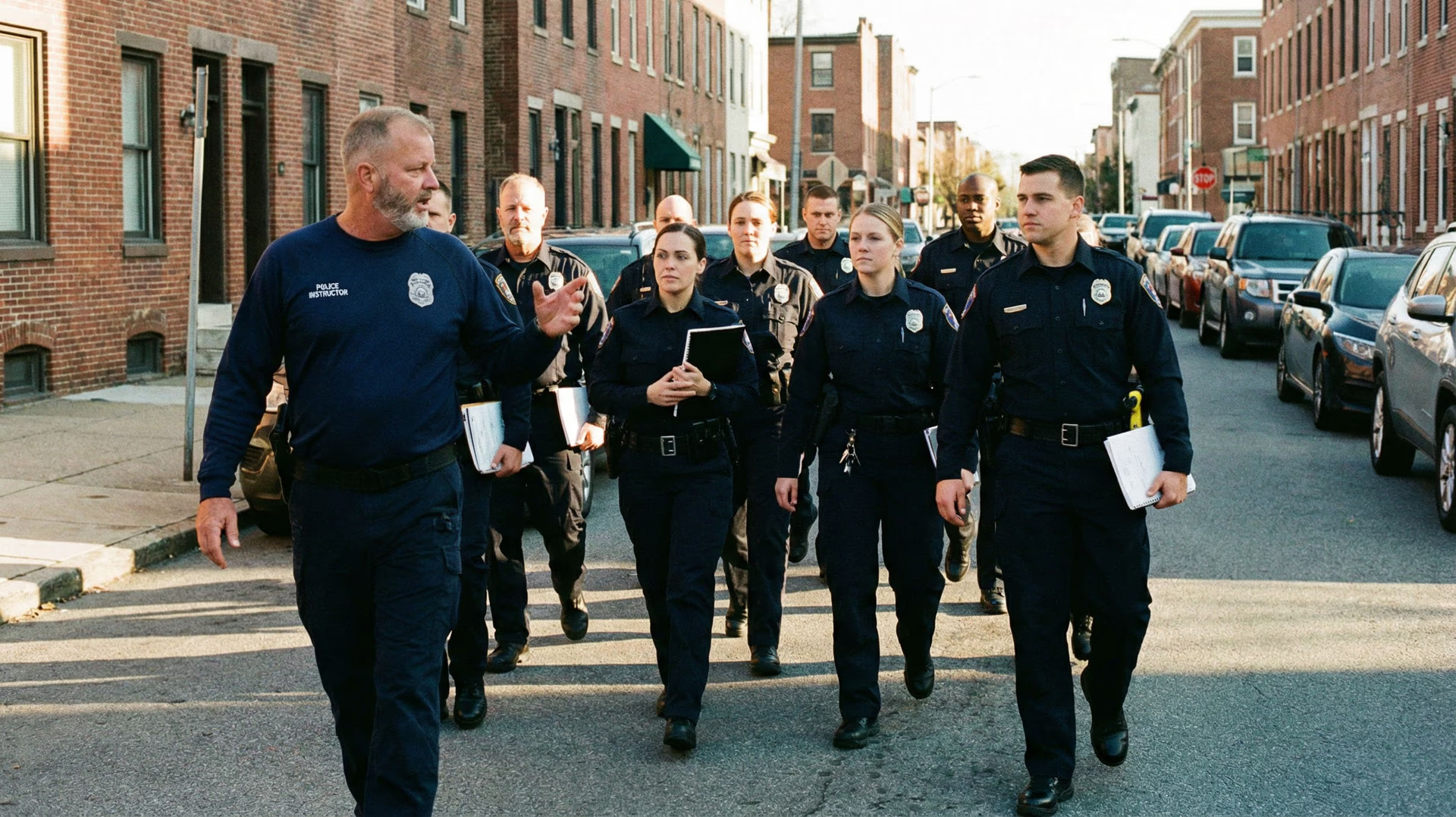
Leadership Training for Public Safety and Local Government
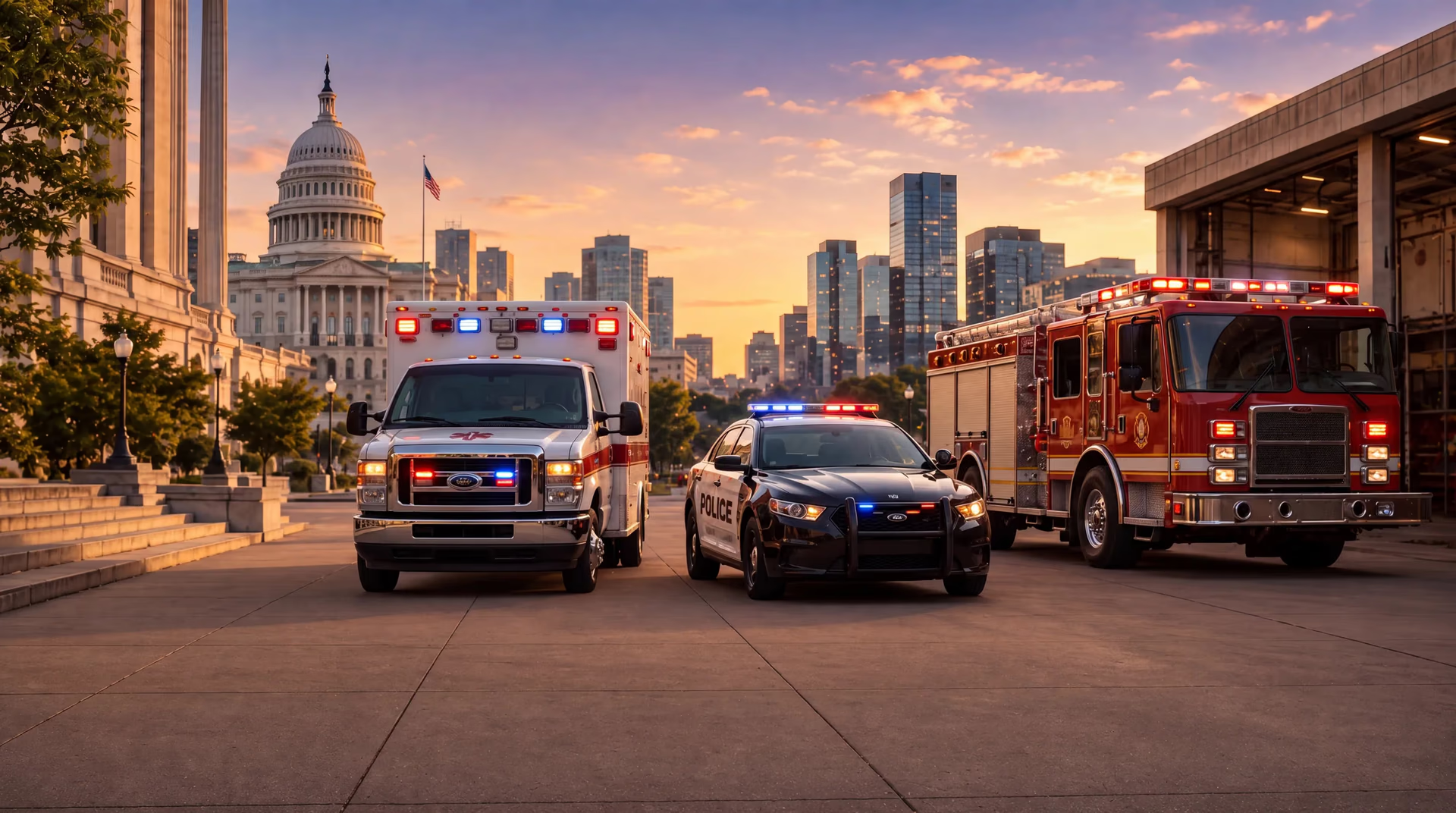
Thatcher Lewis trains the people who lead four services: law enforcement, fire departments, and EMS, the three first-responder services that share a scene, plus the public administration side of city and county government they report into. One accountability methodology, adapted to each service's policies, ranks, and operational reality, taught by a career police chief serving since 1984.
Built for the people who answer the call
Every leadership training engagement is customized to your agency's general orders, SOPs, protocols, and highest-risk scenarios. Choose your service to see exactly what your leaders will train on.
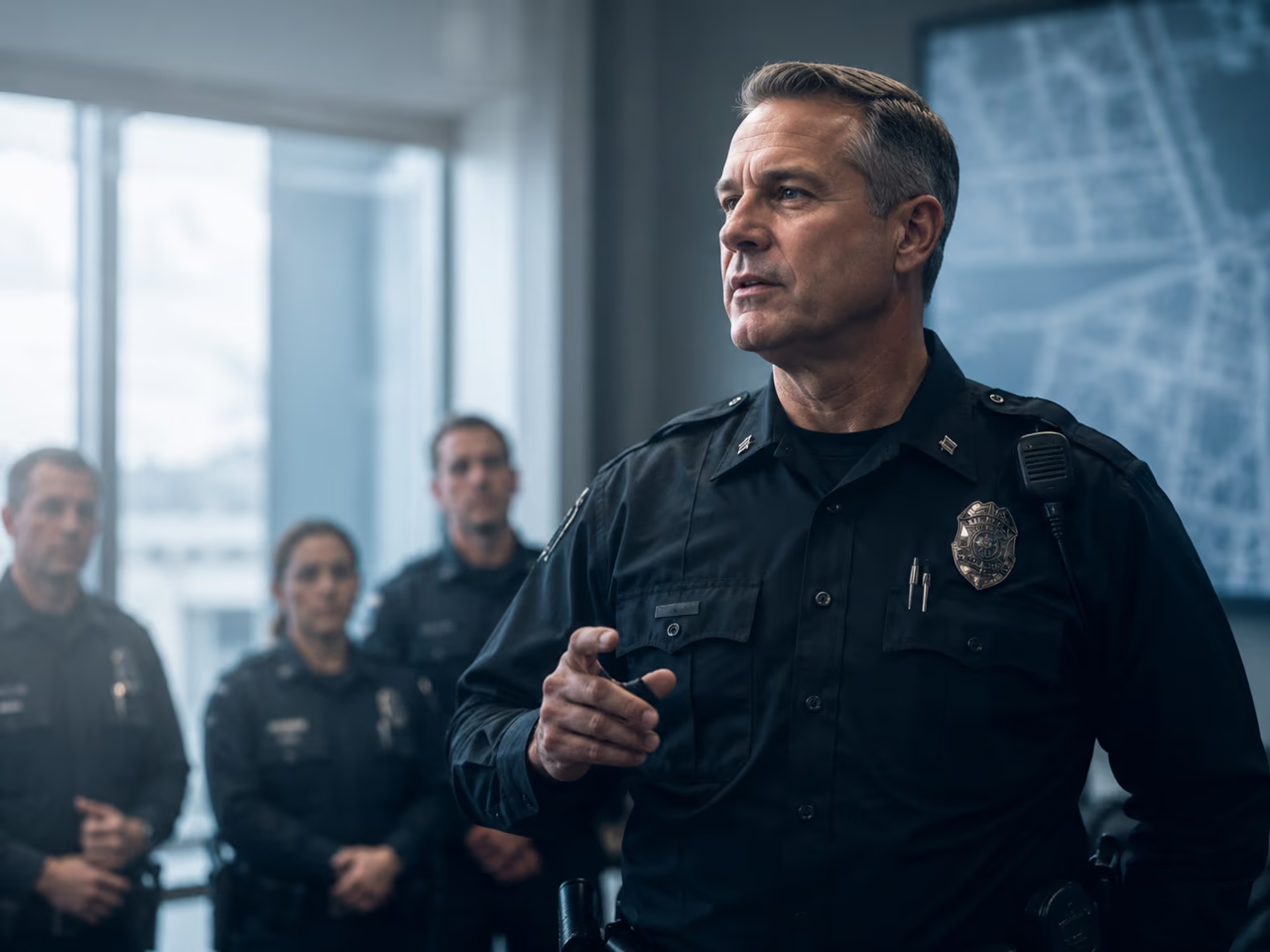
City · County · State · Campus
Law Enforcement
Field and crisis leadership aligned to your general orders and use-of-force policies. Tactical communication, supervisor coaching, critical conversations, duty to intervene, and culture built on accountability.
Who attends: Corporals, sergeants, lieutenants, captains, chiefs, and the civilian supervisors who work alongside them.
- Patrol supervision and street-ready scenario labs
- Duty to intervene and critical conversations
- Culture, ethics, and early-intervention accountability
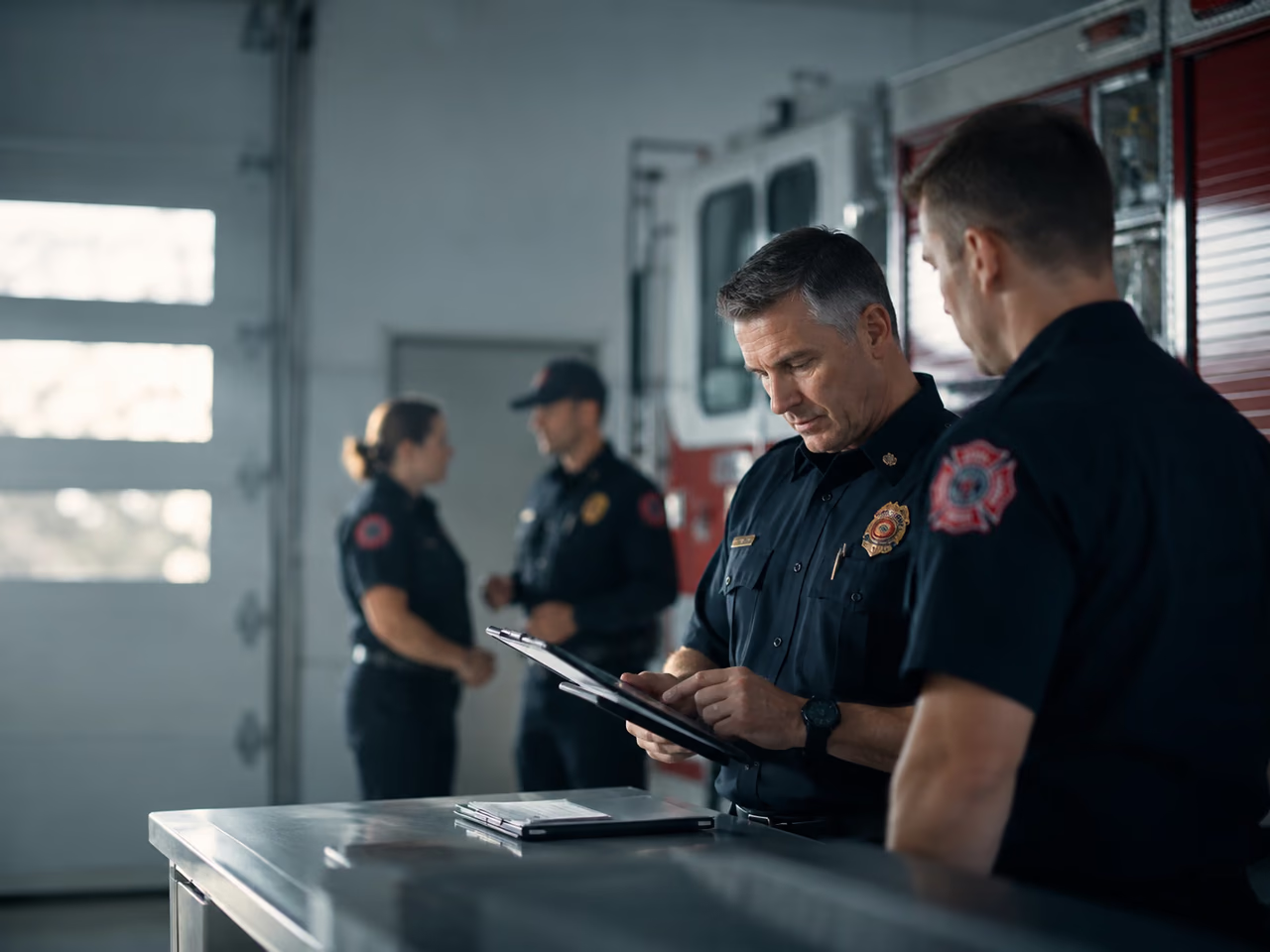
Career · Combination · Volunteer
Fire Departments
Station-to-fireground leadership for the fire service. Servant leadership, integrity, and accountability without humiliation, because what is tolerated in the station becomes normal on calls.
Who attends: Firefighters, company officers, battalion chiefs, and command staff, plus civilian administrative supervisors.
- Incident command presence and fireground communication
- Safety culture and post-incident review
- SOP alignment and battalion-level leadership
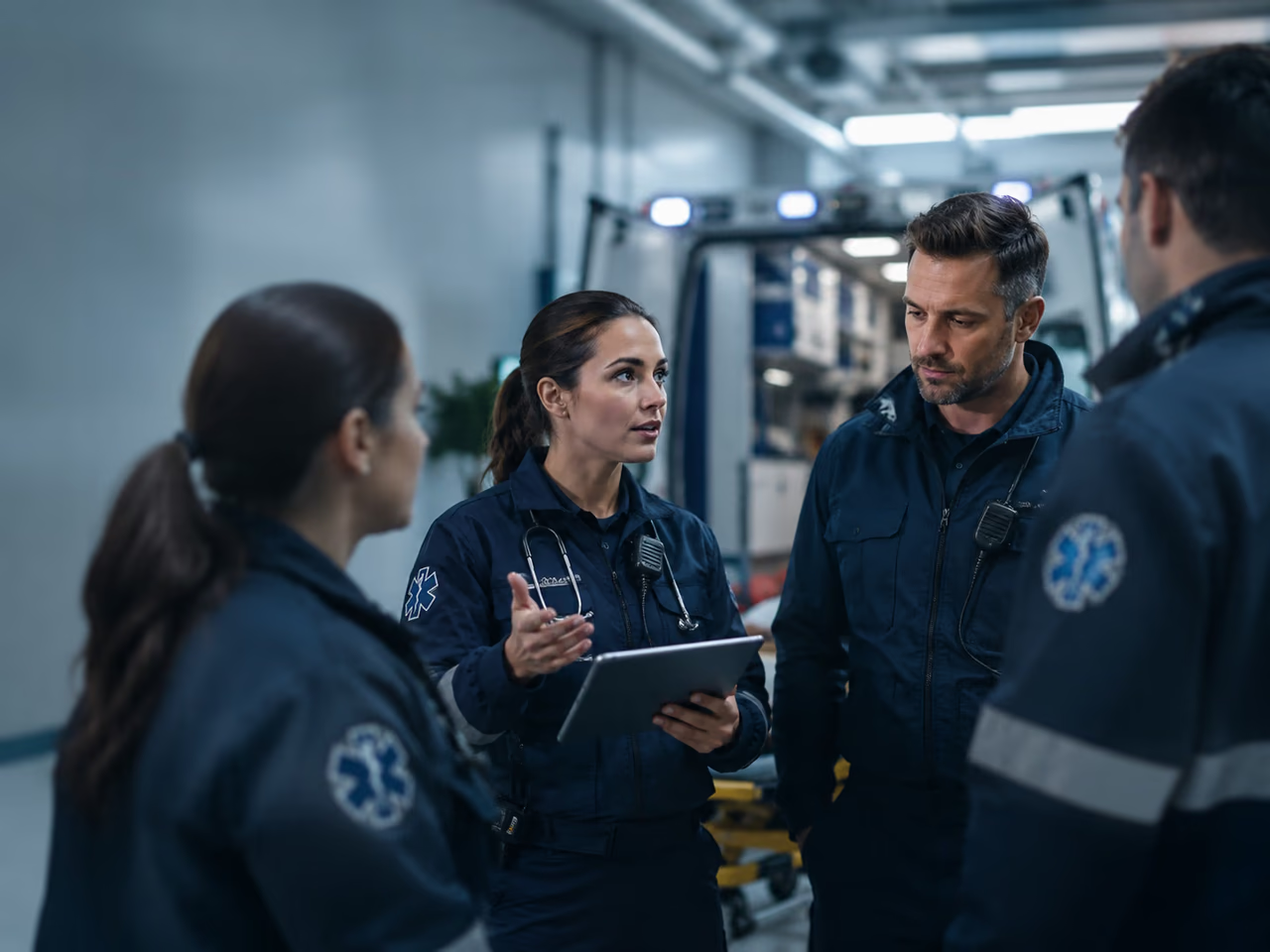
Third-service · Fire-based · Hospital · Private
EMS Services
Frontline and supervisor leadership built for EMS pressure: high-stakes decisions, patient communication, documentation discipline, and the friend-to-boss transition that makes or breaks new supervisors.
Who attends: Field training officers, crew leads, EMS supervisors, operations managers, and EMS chiefs and directors.
- High-stress clinical decision-making and debriefs
- Documentation discipline that protects the agency
- Crew culture, wellness, and retention leadership

City Hall · County · Special Districts
Public Administration
Principled leadership for local government, where public safety discipline meets administrative excellence. Ethics of stewardship, cross-department coordination, and data-driven decisions that survive scrutiny.
Who attends: City and county managers, department heads, division managers, and frontline supervisors across public works, utilities, parks, finance, and HR.
- Cross-department synergy and stakeholder communication
- Ethics of stewardship aligned to the ICMA Code of Ethics
- Data-driven decisions and the AI-fluent leader
Your services respond together. They should lead together.
No public service works alone.
Law enforcement, fire, and EMS are the first-responder services, and they share scenes every shift. Every one of those calls eventually reaches city hall, where public administration, the local-government side those services report into, carries the budget, the policy, and the consequences. When each department trains leadership its own way, standards drift, accountability gets inconsistent, and the friction shows up at the worst possible moment.
Thatcher Lewis teaches one leadership methodology across all four services: clear standards, credible accountability, defensible decisions, and critical conversations handled without humiliation. Then we adapt it to each service's governing documents and operational tempo, so a sergeant, a company officer, an EMS supervisor, and a division manager come away speaking the same leadership language. The same core subjects carry across every cohort, and you can read the leadership topics taught in every cohort before you decide which of your people should attend.
Founder Chief Jon Fehlman has led from patrol to command since 1984, and he teaches every flagship engagement personally. Agencies can train one service at a time or bring sectors together in regional, multi-agency cohorts. Chief Fehlman is also DISC certified.
If you already have a room and a date, the simplest route is to host a course at your own facility and open the remaining seats to neighboring departments. If you would rather see the mechanics first, read how on-site, live online, and hybrid delivery works.
How the Methodology Adapts
Law-enforcement leadership training
Aligned to your general orders, use-of-force policy, and IA and RMS trends.
Fire-service leadership development
Aligned to your SOPs, fireground safety culture, and station expectations.
Aligned to your clinical protocols, documentation standards, and QA process.
Local-government leadership development
Aligned to your municipal code, HR policy, and the ICMA Code of Ethics.
Then Pick the Course Tier
Two published courses cover the whole ladder: Essentials for people moving into supervision, Executive for people responsible for other supervisors. The breakdown below sets each service's ranks against the two tiers so you can build the roster before you call.
See which ranks map to which tierThen pick the course tier. Two courses, every rank accounted for.
Thatcher Lewis publishes two courses. The rule of thumb is simple: if the person is accountable for the work, start with Essentials, the first-line supervisor course. If the person is accountable for other supervisors, start with Executive Leadership Growth, the command-level course. The ranks listed below are the ranks each service actually uses, so you can hand this table to a chief and get a roster back.
Service
Essentials: Training Tomorrow's Leaders Today
Stepping into supervision, or leading informally before the promotion lands.
Executive Leadership Growth
Leading supervisors, setting policy, and carrying command accountability.
Law Enforcement
Essentials
Corporals, field training officers, newly promoted sergeants, future sergeants, and the civilian supervisors who work alongside them.
Executive
Lieutenants, watch commanders, captains, command staff, and chiefs of police.
Fire Departments
Essentials
Firefighters preparing to promote, acting officers, and newly promoted company officers.
Executive
Battalion chiefs, command staff, and fire chiefs accountable for more than one station.
EMS Services
Essentials
Field training officers, crew leads, and paramedics stepping into a first supervisory role.
Executive
EMS supervisors, operations managers, and EMS chiefs and directors.
Public Administration
Essentials
Frontline supervisors and civilian staff across public works, utilities, parks, finance, and HR.
Executive
Division managers, department heads, deputy directors, and city and county managers.
Rosters do not have to be uniform. One workable sequence is to run the whole supervisory layer through Essentials first, then bring command staff through Executive in a later session. Cohorts of 15 or more work best, which is why neighboring departments can split a class between them.
Curriculum for each service is written against that service's own published standards and guidance. The primary sources below are the ones we read and reference, listed so you can check our description against the original. They are citations for readers, not endorsements: see the note at the foot of this list and the fuller account in our standards and sources library.
Law enforcement
U.S. Department of Justice: COPS Office
Federal policy and grant guidance on community-oriented policing, supervision, and accountability.
International Association of Chiefs of Police (IACP)
Published guidance on leadership development, ethics, and command-staff practice.
Bureau of Justice Assistance: VALOR Initiative
Officer safety and wellness research behind scenario decision-making and post-incident debriefs.
Fire service
NFPA 1021: Fire Officer Professional Qualifications
The standard defining minimum qualifications for fire officers I through IV.
U.S. Fire Administration: National Fire Academy
Federal training pathways for company officers and command-level fire leaders.
International Association of Fire Chiefs (IAFC)
Guidance on officer development, behavioral health, and command-staff governance.
EMS
Non-endorsement note: nothing above implies certification by, membership in, approval from, or partnership with any of these bodies. The links run one way and carry no affiliation in either direction. If a listed body objects to how it is described here, we will correct the description.
Subject-matter review: Chief Jon Fehlman, a career law enforcement leader serving since 1984, reviewed this page's sector framing and sources before publication, as set out in our editorial policy. Last reviewed .
Tell us who you lead. We'll build the training around them.
Single-agency cohorts, regional multi-agency sessions, or city-wide leadership programs across departments. Delivered on-site, live online, or hybrid, nationwide.
Want to talk to an agency we have trained? Ask for a reference introduction.